In modern families, learning is no longer limited to classrooms or structured tutoring environments. Parents are increasingly looking for ways to participate actively in their children’s early education, especially during the critical developmental years. One of the most effective approaches that has gained attention in recent years is learning through play. Educational toys are no longer seen as simple entertainment tools; instead, they are becoming powerful learning bridges between parents and children. With the growing availability of educational toy supplies, families now have access to a wide range of interactive learning tools that encourage communication, cooperation, and shared discovery. This raises an important question: can educational toys truly create better parent-child learning experiences?
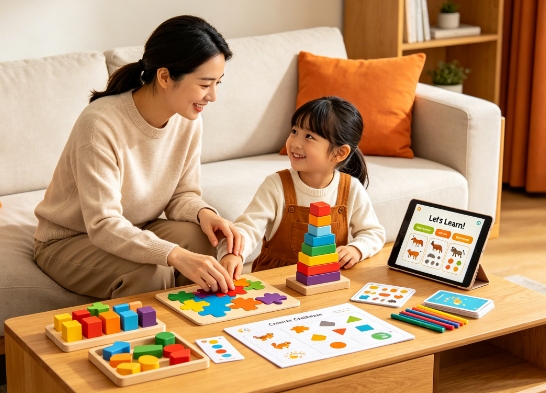
Strengthening Emotional Connection Through Shared Play
One of the most significant benefits of using educational toys in family learning is the emotional connection they help build. When parents actively participate in play-based learning, children feel more supported and engaged.
Key emotional benefits include:
- Building trust through interaction
When parents and children solve puzzles or complete learning tasks together, it creates a sense of teamwork and trust. - Increasing quality bonding time
Shared learning moments replace passive screen time, allowing families to spend more meaningful time together. - Encouraging positive emotional expression
Children feel more comfortable expressing thoughts and feelings in a relaxed learning environment. - Reducing learning-related pressure
Play-based learning removes academic stress, making education feel enjoyable rather than forced.
Through these emotional interactions, educational toys help transform learning into a shared family experience rather than an individual task.
Enhancing Communication Between Parents and Children
Communication is another key area where educational toys play an important role. Instead of one-way instruction, learning becomes a two-way interactive process.
For example:
| Interaction Type | Learning Outcome |
| Asking questions during play | Develops curiosity and critical thinking |
| Describing toy activities | Improves vocabulary and language skills |
| Taking turns in games | Builds patience and listening ability |
| Solving challenges together | Strengthens problem-solving communication |
Through these activities, children not only learn academic concepts but also improve their ability to express ideas clearly. Many families using modern educational toy supplies report improved daily communication patterns between parents and children.
Supporting Cognitive Development Through Guided Learning
Educational toys also provide structured opportunities for parents to guide cognitive development naturally and engagingly. Instead of formal teaching, parents can use play to introduce important learning concepts.
Key cognitive development benefits include:
Logical Thinking Development
Parents can guide children through sorting, matching, and sequencing activities that build reasoning skills.
Memory Strengthening
Repeated interactive play helps children remember words, patterns, and concepts more effectively.
Problem-Solving Practice
When children face challenges during play, parents can encourage them to think independently before providing solutions.
Concept Reinforcement
Educational toys help parents explain academic ideas in a simplified and visual way, making learning easier to understand.
This guided learning approach ensures that children develop both independence and support at the same time.
Encouraging Active Participation and Family Collaboration
Unlike passive learning methods, educational toys require active involvement from both parents and children. This shared participation improves cooperation and teamwork within the family.
Important collaborative learning features include:
- Joint decision-making during gameplay
Parents and children discuss strategies together instead of working individually. - Role switching activities
Children sometimes take the lead, helping parents understand their thinking process. - Group challenge completion
Families work together to achieve goals such as building structures or solving puzzles. - Progress sharing and encouragement
Parents provide feedback and motivation during learning sessions.
This type of collaboration strengthens family relationships while supporting educational growth at the same time.
Creating Long-Term Learning Habits at Home
One of the most valuable outcomes of educational toy use is the development of consistent learning habits within the home environment. When learning becomes part of daily interaction, children naturally develop positive educational behaviors.
Key habit-building effects include:
- Establishing regular learning routines through play sessions
- Encouraging curiosity-driven exploration instead of forced study
- Developing patience and persistence through repeated activities
- Strengthening independent thinking alongside guided support
As access to educational toy supplies continues to expand, more families are incorporating structured play into everyday life, making home-based education more consistent and effective.
Conclusion
Educational toys can significantly improve parent-child learning experiences by combining education with emotional bonding, communication, and interactive engagement. They transform traditional learning into a shared activity that strengthens relationships while supporting cognitive and emotional development. Through guided play, collaboration, and consistent interaction, families can create a more enjoyable and effective learning environment at home. As educational tools continue to evolve, they are becoming an essential part of modern parenting, helping bridge the gap between fun and meaningful learning in everyday family life.
0