In recent years, educational methods have undergone significant transformation due to technological advancement and changing learning philosophies. Among these changes, educational toys have gained widespread attention as powerful tools that combine play with learning. Many parents and educators now wonder whether these tools could eventually replace traditional classroom learning methods. While educational toys offer interactive and engaging experiences that enhance children’s cognitive and social skills, they are not designed to fully replace structured education systems. Instead, they function as complementary tools that support formal learning. The growing availability of products through global supply networks, including educational toy wholesale channels, has also contributed to their increasing presence in both homes and schools worldwide.
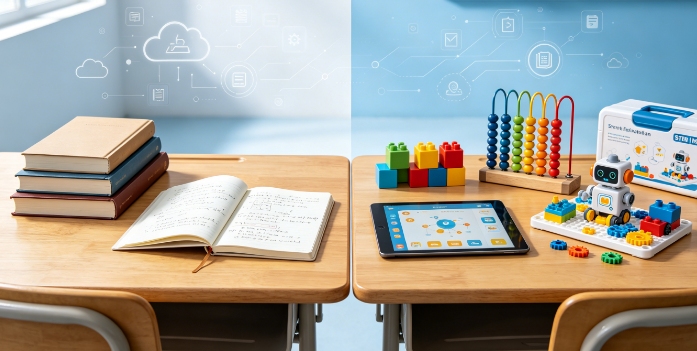
1. Strengths of Educational Toys in Modern Learning
Educational toys bring a unique learning approach that focuses on engagement, exploration, and hands-on experience. Unlike traditional lectures, they encourage children to actively participate in the learning process.
Key advantages include:
- Active learning stimulation: Children learn by doing, which improves memory retention and understanding.
- Skill development integration: Many toys are designed to enhance logic, creativity, problem-solving, and motor skills simultaneously.
- Emotional engagement: Play-based learning reduces stress and increases curiosity, making education more enjoyable.
- Self-paced exploration: Children can learn at their own speed without pressure, which helps build confidence.
These strengths make educational toys highly effective for early childhood development, especially when used alongside structured teaching methods.
2. Limitations Compared to Traditional Classroom Learning
Despite their benefits, educational toys cannot fully replace classroom learning because they lack structure, curriculum alignment, and professional instruction.
Important limitations include:
- Lack of systematic knowledge delivery: Toys usually focus on specific skills rather than complete academic subjects.
- Limited Depth of Learning: Complex subjects—such as advanced mathematics or scientific theories—require guided instruction.
- Absence of standardized evaluation: Unlike schools, toys do not provide formal assessment or progress tracking.
- Reliance on User Interaction: Learning outcomes depend on the degree of active interaction between the child and the toy.
Therefore, while educational toys are valuable, they cannot independently provide a comprehensive education system.
3. Role of Educational Toys in Supporting Classroom Education
Instead of replacing traditional learning, educational toys are increasingly being used as supplementary tools in classrooms and at home to enhance teaching effectiveness.
Their supportive functions include:
- Reinforcing classroom concepts: Teachers use toys to demonstrate abstract ideas in a tangible way.
- Encouraging collaboration: Group activities with toys promote teamwork and communication among students.
- Improving engagement levels: Interactive learning tools help maintain students’ attention during lessons.
- Bridging theory and practice: Toys help connect textbook knowledge with real-world applications.
With the expansion of global supply chains and increased accessibility through educational toy wholesale networks, schools and parents can more easily integrate these tools into daily learning activities.
4. The Evolving Role of Teachers in a Toy-Enhanced Learning Environment
As educational tools become more advanced, the role of teachers is also evolving rather than being replaced. Teachers remain essential in guiding, interpreting, and structuring learning experiences.
Key changes in teaching roles include:
- Facilitator of learning: Teachers guide students in using toys effectively rather than only delivering lectures.
- Personalized instruction provider: Educators adjust learning strategies based on each child’s progress.
- Critical thinking mentor: Teachers help students analyze and reflect on what they learn through play.
- Technology integrator: Educators incorporate digital and physical learning tools into lesson plans.
This evolution shows that educational toys enhance teaching rather than eliminate the need for professional educators.
5. Market Growth and Accessibility of Educational Toys
The increasing demand for learning-based products has significantly expanded the global educational toy market. This growth is driven by innovation, technology, and improved distribution systems.
Major market factors include:
- Technological advancements: Smart toys and STEM kits are becoming more sophisticated and widely available.
- Parental awareness: Families are investing more in early learning tools for children’s development.
- Global distribution networks: Retailers and suppliers can efficiently source products through educational toy wholesale channels, making educational toys more accessible and affordable.
- Diverse product offerings: The market now includes toys for different age groups and learning objectives.
This expansion ensures that educational toys are widely available and increasingly integrated into both home and school environments.
Conclusion
Educational toys play an important role in modern learning by enhancing engagement, creativity, and practical understanding. However, they are not capable of replacing traditional classroom education, which provides structured knowledge, professional instruction, and standardized evaluation. Instead, the most effective learning model is a blended approach that combines both methods. As educational tools continue to evolve and become more accessible through global supply systems such as educational toy wholesale channels, they will continue to serve as valuable supplements that enrich and support traditional education rather than replace it.
0