Because of the rapid development of smart devices, industrial control devices, and embedded devices, display modules have become an integral part of devices, as they not only improve performance but also the interaction between man and machine. Mini TFT displays have become a good choice for many because of features like high resolution, fast response time, good color representation, and multiple interfaces, among others; thus, they are found in smart devices, industrial machines, medical devices, consumer devices, and embedded devices. There are several factors to take into account while selecting display modules.
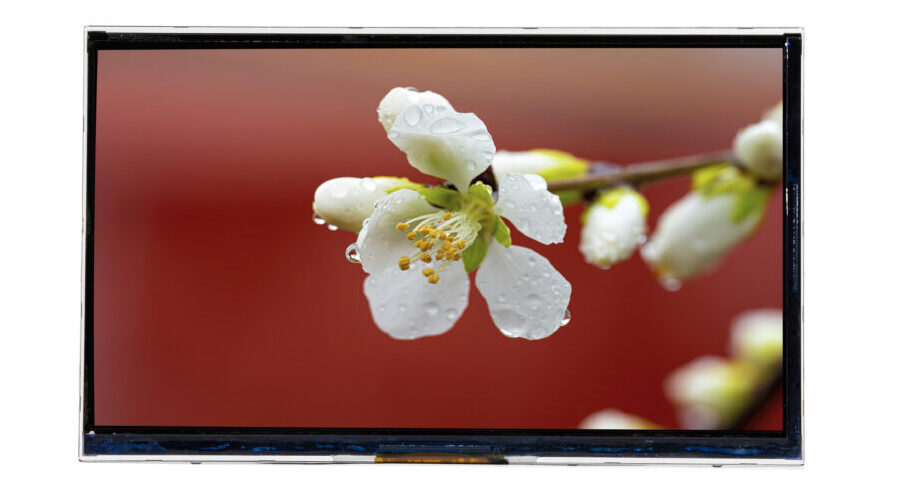
What Is a Mini TFT Display?
A mini TFT display is a small-sized LCD module based on Thin Film Transistor (TFT) technology. Unlike traditional LCD screens, TFT displays use individual transistors to control each pixel, allowing more accurate control of colors, brightness, and image changes.
Compared with conventional LCD modules, TFT technology offers several advantages:
- Faster response time
- Higher image clarity
- Better color reproduction
- Improved support for dynamic content
A typical TFT display module consists of several key components, including:
- TFT LCD panel
- Display driver IC
- LED backlight system
- Flexible printed circuit (FPC)
- Communication interface
Each component plays an important role in overall display performance. For example, the driver IC affects refresh speed and image stability, while the backlight design determines brightness and visibility in different environments.
What Specifications Should You Consider for a Mini TFT Display?
When selecting a mini TFT display, engineers need to evaluate multiple technical specifications based on the requirements of the final product. Different applications have different expectations for display performance, so proper parameter selection is essential.
1. Display Size and Resolution
The size of the screen is among the major determinants in selecting a display module. Miniature TFT screens are mostly intended for small electronic gadgets, and therefore normal sizes may vary between 1 and 5 inches.
Different sizes and resolutions are suitable for different applications:
| Display Size | Typical Resolution | Common Applications |
| Around 1 inch | 120×240 | Wearable devices and compact electronics |
| 1.8 inch | 360×360 | Smart speakers and round smart devices |
| Around 2.8 inch | 240×320 | Embedded systems and control interfaces |
| 3.5 inch | 640×480 | Industrial equipment and smart terminals |
| Above 4 inches | 480×800 or higher | Industrial control and advanced UI systems |
Small-size screens are utilized for simple visualization of data, indicating status, and control. Higher-resolution screens allow for displaying sophisticated graphics, menus, and real-time charts of data.
For instance, a 3.5 inches 640×480 TFT screen may help visualize images better when it comes to an interface in industries, whereas small 1-inch screens will be more convenient for wearables.
2. Interface Options
The interface determines how the display communicates with the main controller and directly affects system design complexity.
SPI Interface
SPI (Serial Peripheral Interface) is widely used because of its simple structure and low hardware requirements.
It is commonly applied in:
- Smart watches
- Portable electronic devices
- Low-power products
For small-size displays with relatively simple content, an SPI interface can reduce design complexity and improve integration efficiency.
RGB Interface
RGB interfaces provide faster data transmission and are suitable for applications requiring higher refresh rates.
Typical applications include:
- Industrial display systems
- Control panels
- Smart terminals
MIPI Interface
MIPI interfaces have become increasingly popular in smart devices and advanced embedded systems due to their high-speed transmission capability and low power consumption.
Key advantages include:
- Faster data communication
- Reduced PCB wiring complexity
- Better support for high-resolution displays
For applications requiring compact design and high display performance, MIPI-based solutions are often an ideal choice.
Key Features of Mini TFT Display
Excellent Color Performance
Color capability is an important factor affecting user experience. Modern mini TFT display modules commonly support 65K colors, 262K colors, or even 16.7 million colors.
Higher color depth enables:
- More realistic images
- Clearer graphics
- Better user interface presentation
This is especially important for products that need to display icons, images, animations, or real-time information.
Fast Response and Stable Image Performance
TFT technology allows each pixel to be controlled independently, which helps reduce image delay and motion blur.
Because of this advantage, mini TFT displays are widely used in:
- Industrial monitoring equipment
- Digital instruments
- Medical testing devices
- Interactive terminals
For applications requiring frequent data updates, stable response performance ensures smoother operation and better user experience.
Flexible Design Capability
Different products have different requirements for installation space and mechanical structures. Therefore, flexible customization capability is an important consideration.
A mini TFT display can often be customized in terms of:
- Display size
- FPC length
- Mounting structure
- Backlight brightness
- Touch panel integration
For example, compact smart devices may require ultra-thin structures, while industrial products may prioritize durability and long-term reliability.
Where Are Mini TFT Displays Used?
Industrial Control Equipment
Industrial automation systems often require continuous monitoring of operating parameters, measurement data, and equipment status.
A mini TFT display can be integrated into:
- Automation control panels
- Testing instruments
- Industrial monitoring systems
- Smart control terminals
These applications usually require high reliability, stable operation, and clear visibility under different working conditions.
Smart Consumer Electronics
With the growth of smart hardware products, small color displays have become an important element for improving product design and user interaction.
Common applications include:
- Smart speakers
- Wearable devices
- Smart home controllers
- Portable electronic products
For example, round TFT modules can provide unique design possibilities for smart devices, while compact high-resolution displays are suitable for products with limited installation space.
Embedded Systems
Embedded products often require compact display solutions that can provide real-time information within a limited footprint.
Typical applications include:
- Robotics
- Medical monitoring equipment
- Testing devices
- Smart control systems
By selecting suitable size, interface, and display parameters, manufacturers can develop more efficient and user-friendly embedded products.
How to Choose the Right Mini TFT Display?
Consider the Application Environment
Different operating environments create different requirements for display modules.
Before selecting a display, engineers should evaluate:
- Operating temperature range
- Expected product lifetime
- Outdoor visibility requirements
- Vibration or impact conditions
Industrial applications usually require stronger reliability, while consumer products often focus more on appearance and visual quality.
Match the Interface with the System Design
During product development, engineers should confirm:
- Supported interface type of the main controller
- Required data transmission speed
- PCB space limitations
- Software development requirements
Choosing the right interface helps improve development efficiency and ensures stable system performance.
Evaluate Display Performance Parameters
Besides size and resolution, several other specifications should also be considered:
| Parameter | Function |
| Brightness | Determines visibility in different environments |
| Contrast Ratio | Affects image depth and clarity |
| Viewing Angle | Influences user viewing experience |
| Power Consumption | Impacts battery life |
| Operating Temperature | Determines suitable application conditions |
A balanced selection of these parameters ensures reliable performance during actual operation.
Conclusion
Choosing the right mini TFT display requires careful evaluation of factors such as size, resolution, interface type, display performance, and application environment. A suitable display solution can improve product functionality and user experience across compact smart devices, industrial control systems, and embedded platforms.
0