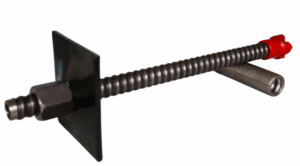
Anchors serve a crucial role in geotechnical engineering as they help in providing stability to tunnels, slopes, foundations, and other constructions. According to the geological nature of the construction and the requirements of the construction, constructors may need self-drilling anchors, corrosion-resistant anchor bolts, and prestressed hollow bolts.
Selection of a proper anchor bolt manufacturer plays an important part in making sure that the produced items are consistent in terms of quality and that there is efficiency in construction.

Understanding Anchor Bolts and Their Applications
The anchor bolts and other related products are used for transferring loads into the ground, concrete, or any supporting medium. The designs of these bolts are different depending on their installation method and geological conditions.
In civil engineering applications, the following are some of the areas where the products are widely utilized.
- Tunnel Engineering: The anchoring system assists in stabilizing the rock formation and helps with excavation based on the ground conditions of the project.
- Slope Stabilization: The product can assist in stabilizing an unstable rock formation or soil slope if properly applied.
- Foundation Engineering: Specific anchoring systems can be utilized to fix structural components or transfer loads.
- Underground Engineering: Hollow anchor bars and associated systems can be part of ground stabilization and support operations.
As the applications are different, buyers must ensure that the selected products satisfy the engineering requirements of the project.
Common Types of Anchor Bolts for Ground Engineering
Different anchoring products serve different purposes. Understanding their characteristics helps contractors and distributors identify suitable options for specific projects.
Self-Drilling Anchor Bars
Self-drilling anchor bars are bars that integrate both drilling and anchoring activities in one system. Self-drilling anchor bars are frequently used in situations where drilling is followed by installation and is considered inconvenient or problematic.
With some systems, there is the presence of a sacrificial drill bit mounted onto the anchor bar such that drilling and grouting can take place using the hollow bar.
In acquiring these fasteners, purchasers must inspect the thread profile, bar diameter, length, connection fittings, and suitability for the desired drilling equipment. An experienced anchor bolt manufacturer can help explain the available specifications and their suitability for the job at hand.
Galvanized and Stainless Steel Anchor Bars
Corrosion prevention can be critical in the case of anchorage products subjected to moisture or aggressive soil conditions, which can cause decay of the products.
Hot-dip galvanized HDG anchor rods have a zinc coating that acts as a corrosion shield. In the case of stainless steel anchor rods, there can be a possibility of using them where corrosion resistance can be desired, based on the selected steel grade.
It is necessary to take into account the surrounding conditions, anticipated lifetime, and budget of the project. It is also essential for buyers to check whether the selected coating or steel grade is correct or not.
Prestressed Hollow Bolts
Hollow bolts can be used in some engineered anchoring systems, which require the application of tensile stress. The hollow nature of the bolts might cater for some installation or grouting processes, as per the design of the bolt product.
When dealing with any resin anchoring products, it is essential to know about the type of resin, installation process, curing period, and whether the bolt system can work with the resin.
What to Look for in an Anchor Bolt Manufacturer
Supplier selection entails more than just finding a product that fits the necessary dimensions. It is important to evaluate if the supplier can meet all your expectations on technical and quality levels.
Material Selection and Corrosion Protection
The materials used will determine the quality of the anchoring products. Depending on the intended use of these products, specific material grades and other material features might be needed.
Request that the manufacturers give you details about the materials that have been used for the manufacture of these products. In the case of galvanized products, get the standards for the zinc coating used and how it was tested. For stainless steel products, the grade of steel should be established.
A reliable anchor bolt manufacturer should communicate these details clearly so that buyers can compare products against the project specifications.
Manufacturing Capabilities and Customization
Different diameters of bars, threads, lengths, couplers, drill bits, and other complementary products may be needed for various ground engineering constructions. The suppliers must prove their capability to manufacture such products using their production process.
Before requesting a quotation, prepare drawings or a specification sheet containing the following information:
- Product type and dimensions
- Thread profile and connection requirements
- Material grade and mechanical properties
- Surface treatment or corrosion protection
- Required accessories and order quantity
- Applicable technical standards and inspection requirements
Clear specifications help reduce misunderstandings and make quotations from different suppliers easier to compare.
Quality Control and Technical Documentation
A consistently high standard is especially vital when dealing with products that are to be put into use under load-carrying conditions. In accordance with the particular product and the required standards, the inspection process may include measurements of size, threads, material, coating thickness, and mechanical behavior.
The buyer should inquire about the kind of inspection done and the documentation offered together with each shipment. Material certificates, dimensional measurement results, and test results will provide evidence of compliance with the standard.
Another important aspect is the confirmation that the manufacturing company’s quality certificates also apply to the respective production processes.
How to Select the Right Anchoring System for Your Project
In fact, even the best-made product could be inappropriate when it does not suit the soil or installation needs. There are a number of technical aspects that should be taken into account.
| Selection factor | What to consider |
| Ground conditions | Soil composition, rock quality, fractures, and groundwater conditions |
| Installation method | Drilling equipment, grouting procedure, and available working space |
| Load requirements | Design loads, tensile capacity, and applicable safety factors |
| Corrosion exposure | Moisture, ground chemistry, and required service life |
| Product compatibility | Thread systems, couplers, drill bits, and installation equipment |
| Project specifications | Applicable standards, testing requirements, and engineering drawings |
For instance, a self-drilling anchor bar might be worth considering in cases where drilling and grouting are required to be done in one go. Galvanized or stainless steel varieties might be worth considering in areas that have high potential for corrosion. A hollow bolt may be considered for prestressed applications.
It is important for the final selection to be based on engineering design and site investigation findings.
Questions to Ask Before Ordering Anchor Bolts
Before committing to a supplier, buyers should clarify both technical and commercial requirements. These questions can help identify potential problems early.
- Can you manufacture according to project drawings? Confirm the available customization options and any limitations.
- What product specifications and test reports are available? Request documents relevant to the selected product and applicable standards.
- What is the minimum order quantity? Check whether the supplier can accommodate the required volume and future replenishment orders.
- What are the production and delivery lead times? Confirm the schedule for the actual specifications and order quantity.
- How are product defects or nonconformities handled? Clarify inspection responsibilities, corrective actions, and replacement procedures.
- Can you supply compatible accessories? Check whether the required drill bits, couplers, nuts, plates, or other components are available for the selected system.
An anchor bolt manufacturer that provides clear answers and complete technical information can make procurement and project coordination more straightforward. For large orders, buyers may also consider requesting samples or conducting agreed inspections before shipment, where practical.
Conclusion
A proper evaluation of the needs, specifications, material qualities, and quality control measures is essential when selecting an anchor bolt manufacturer. In the case of ground engineering uses, it is important for the buyer to be aware of the distinct features of self-drilling anchor bars, corrosion-resistant anchor bars, and prestressed hollow bolts.
A thorough comparison of manufacturers’ capabilities, paperwork, customization, and deliveries will assist the purchaser in making better buying choices. Such a procedure will also help to select proper anchoring products that will meet the engineering requirements of the given project.
0