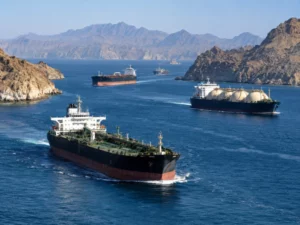
International oil prices rely not only on production and consumption but also on the safety of main shipping lanes. The Strait of Hormuz is situated at the entrance to the Persian Gulf and acts as a link between main energy exporters from the Middle East and the rest of the world. In case of the appearance of geopolitical risks in this region, changes in oil prices may occur even before shipping disruption. Shipping insurance rates, tanker operations, as well as crude oil futures prices, can respond to potential disruptions.
How can one narrow water channel affect world oil prices so dramatically?
1. Why Is the Strait of Hormuz So Important to Global Oil Supply?
The Strait of Hormuz is a vital energy transit route in the world. The significance of this strait is attributed to the volume of oil transport and the reliance of the exporters on seaborne transport.
1.1 Strait of Hormuz Location and Quantity of Oil Passing Through It
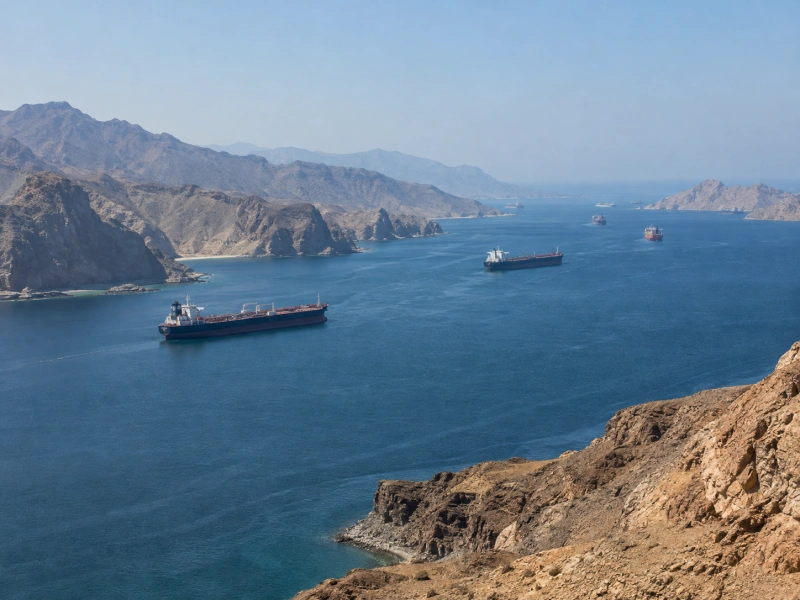
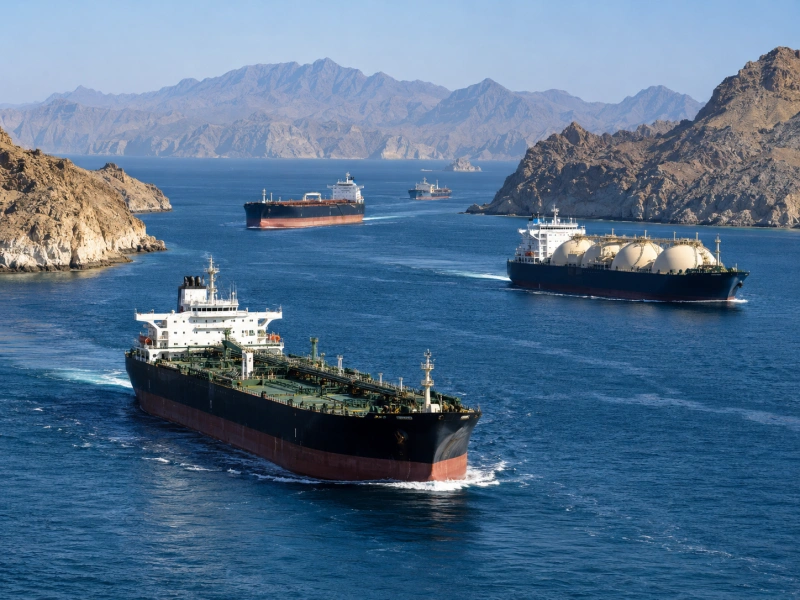
The Strait of Hormuz lies between Iran and Oman and serves as the link between the Persian Gulf and the Gulf of Oman.
States that extract oil, such as Saudi Arabia, Iraq, the United Arab Emirates, and Kuwait, employ the strait for transportation of the commodity abroad. Qatar also depends on the strait for transporting liquefied natural gas. As reported by U.S. Energy Information Administration (EIA), the daily amount of oil transported through the strait in 2024 made up about 20 million barrels that constitute about 20 percent of global demands on petroleum liquids. This means that the Strait of Hormuz is an important constituent of the global energy transportation infrastructure. Any disturbance at the strait may call into question the reliability of oil transportation.
1.2 Which Countries Depend Most on the Strait of Hormuz?
Countries depend on Hormuz differently, depending on whether they export or import energy.
| Country | Main Connection | Potential Risk |
| Saudi Arabia | Major crude oil exporter | Export disruptions |
| Iraq | Southern oil exports use Gulf routes | Delivery delays |
| UAE | Significant petroleum exporter | Shipping disruptions |
| Qatar | Major LNG exporter | LNG shipment interruptions |
| China | Large oil importer | Higher import costs |
| India | Import-dependent oil market | Rising refinery feedstock costs |
| Japan | Highly dependent on imported energy | Increased energy expenses |
Saudi Arabia and the UAE have pipelines that bypass the strait for some exports. However, these alternatives cannot fully replace normal Hormuz shipping volumes.
2. How Does the Strait of Hormuz Affect Global Oil Prices?
Hormuz affects oil prices based on the current supply and the expectations of future supplies.
2.1 Why Can Shipping Risks Raise Oil Prices Before Supply Falls?
Oil markets tend to respond to perceived threats before any physical shortage.
Military conflicts, tanker problems, or shipping difficulties can result in several things:
• Increased insurance costs: The war-risk insurance rates for tankers can rise.
• Route changes: Ship operators rethink their shipping routes and schedules.
• Building inventories: Buyers might build up their inventories in anticipation of a disruption.
• Changes in the futures market: Traders will change the prices of crude oil to account for the potential loss of supplies.
Thus, a geopolitical risk premium can arise due to these reasons and push prices higher despite the lack of any physical shortage. Therefore, a rise in prices does not always mean a shortage.
2.2 What Happens If Oil Shipments Through Hormuz Are Disrupted?
The outcome depends on the extent to which shipping is affected, the duration of disruptions, and the availability of alternative sources. Let us imagine a situation where there are normal shipments of 20 million barrels per day. If 10% of this amount is disrupted, about 2 million barrels per day will be disrupted.
This does not necessarily mean that there will be a reduction in the amount of oil produced globally by this amount.
Possible outcomes may be:
• Increased fluctuations in the prices of Brent crude oil.
• Increased freight charges for tankers and premiums for insurance.
• Increased cost of purchasing crude for refineries.
• Increased cost of imports to oil-dependent economies.
For instance, an economy importing 5 million barrels per day will incur extra expenditure of $50 million per day due to an increase in oil prices by $10 per barrel, assuming constant volumes of imports.
3. Can the World Reduce Its Dependence on the Strait of Hormuz?
Alternative infrastructure, strategic reserves, and diversified energy supplies can reduce vulnerability, although none can eliminate the risks.
3.1 Are There Alternative Oil Shipping Routes?
Some producers in the Middle East have built infrastructure that circumvents Hormuz.
East-West Pipeline of Saudi Arabia
This is a pipeline that delivers crude oil from eastern Saudi Arabia to export terminals in the Red Sea, thus avoiding the strait.
Habshan-Fujairah Pipeline of UAE
The pipeline transports crude oil to Fujairah, an export terminal situated outside the Strait of Hormuz.
However, the pipeline capacity and spare capacity are limited. These alternatives give some flexibility but are unable to replace the entire capacity of the strait.
3.2 What Can Countries Do to Protect Their Energy Supply?
Four ways in which resilience could be improved are:
Strategic Petroleum Reserves
This involves holding stocks of oil for emergencies that can help during temporary supply problems.
Supplier Diversification
Involves buying crude oil from several areas so as not to rely on one route for exports.
Alternative Transport Infrastructure
Construction of pipelines and other transport-related infrastructure helps.
Energy Efficiency
This involves becoming more energy efficient in terms of transport and industrial operations.
The above actions do not guarantee that all shocks to prices will be avoided.
Conclusion
This is not because the Strait of Hormuz influences world oil production, but because of the large quantity of Middle Eastern oil shipped via this vital seaway. If there is a problem with shipping security, it may impact the market even without any shortage, in terms of increased shipping costs, insurance premiums, and future oil prices. Although there are other routes and stockpiles, Hormuz remains the critical threat for the international energy business. It is not about controlling the world’s oil production; it is about how the oil will be shipped to the world’s markets.
0