The multicolor bougainvillea is one of the most eye-catching ornamental plants in tropical and subtropical landscaping, known for its vibrant bracts that appear in shades of pink, purple, red, orange, white, and even mixed tones on a single plant. Because of its striking appearance and fast-growing nature, many gardeners often ask whether multicolored bougainvillea can bloom throughout the year. The answer depends on climate conditions, sunlight exposure, watering habits, and overall plant care. While it is capable of producing flowers for extended periods in warm environments, it does not typically bloom continuously all year without interruption.
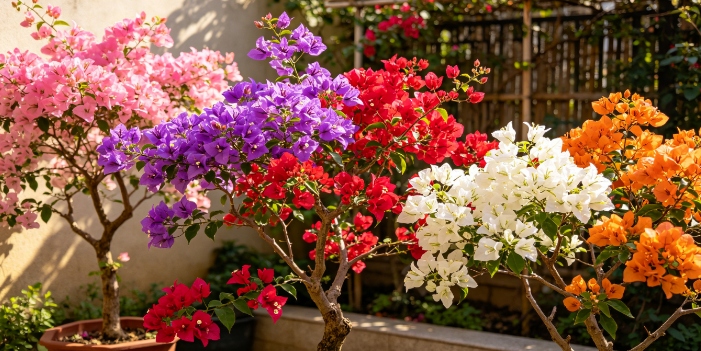
Blooming Cycle of Multicolor Bougainvillea
The flowering behavior of multicolor bougainvillea is closely tied to seasonal and environmental factors, which determine how frequently and how abundantly it produces bracts.
- Warm climates encourage near year-round blooming
In tropical and subtropical regions where temperatures remain consistently warm, multicolor bougainvilleacan bloom multiple times a year. With sufficient sunlight and proper care, it may appear to flower almost continuously, although short resting periods still occur between blooming cycles. - Cooler seasons reduce flowering frequency
When temperatures drop, especially in regions with mild winters, the plant slows down its growth and may enter a semi-dormant state. During this time, flowering becomes limited or temporarily stops until warmer conditions return. - Sunlight exposure directly affects bloom intensity
Multicolor bougainvillea requires full sun to produce abundant bracts. Plants grown in shaded areas tend to produce more leaves than flowers, significantly reducing blooming frequency and color intensity.
Environmental Conditions That Influence Flowering
The performance of multicolor bougainvillea is highly dependent on its growing environment, which plays a major role in determining whether it can flower repeatedly or only seasonally.
- High sunlight exposure (6–8 hours daily minimum)
Adequate sunlight is the most critical factor. Without strong light exposure, the plant focuses on vegetative growth rather than flowering, resulting in fewer or no blooms. - Well-drained soil conditions
Bougainvillea does not tolerate waterlogged soil. Proper drainage encourages healthy root systems, which support consistent flowering cycles and reduce the risk of root rot. - Warm temperature stability
The plant thrives in temperatures between 20°C and 35°C. Sudden cold exposure or frost can significantly interrupt blooming and damage branches. - Moderate water stress for better flowering
Slightly controlled watering, rather than excessive irrigation, can stimulate blooming. Overwatering often leads to lush foliage growth instead of flowers.
Care Practices to Promote Continuous Blooming
To maximize flowering frequency, multi-colored bougainvilleas require specific care techniques to promote continuous, recurrent blooming throughout the entire growing season.
- Strategic pruning for new growth stimulation
Regular pruning helps remove old or weak branches and encourages fresh shoots, which are more likely to produce vibrant bracts. Pruning after each bloom cycle can significantly enhance flowering frequency. - Balanced fertilization approach
Low-nitrogen, high-phosphorus fertilizers are often recommended to support flower production rather than excessive leaf growth. Over-fertilization with nitrogen can reduce blooming intensity. - Controlled watering schedule
Allowing the soil to dry slightly between watering sessions helps stimulate flowering. Constant moisture may weaken bloom production and increase vegetative growth. - Pest and disease prevention
Healthy plants are more likely to bloom consistently. Regular inspection for aphids, spider mites, or fungal issues ensures the plant remains strong and productive.
Seasonal Behavior and Bloom Variations
Even though multicolor bougainvillea is known for long flowering periods, its blooming pattern still changes with seasons and environmental stress factors.
- Spring and summer peak blooming periods
During warm months, the plant typically produces its most abundant and colorful blooms. This is the primary flowering season in most climates. - Autumn transition with reduced intensity
As temperatures gradually cool, flowering may become less frequent, though many plants still retain some color depending on local conditions. - Winter dormancy in cooler regions
In areas with cold winters, the plant may stop blooming completely and focus on survival until temperatures rise again. - Continuous bloom in ideal tropical conditions
In equatorial climates, multicolor bougainvilleamay produce flowers in multiple cycles throughout the year, with only short pauses.
Conclusion
Multicolor bougainvillea is not a strictly year-round flowering plant in all environments, but it can bloom for extended periods under ideal tropical or subtropical conditions. Its flowering frequency depends heavily on sunlight, temperature, soil drainage, and proper maintenance practices. With adequate care, such as pruning, controlled watering, and balanced fertilization, this plant can produce vibrant and repeated blooms for most of the year. For gardeners seeking long-lasting color and low-maintenance beauty, multicolor bougainvillea remains one of the most rewarding ornamental plants in landscape design.
0