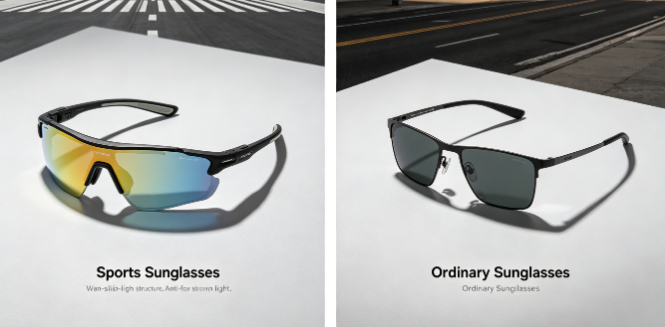
Sunglasses are commonly used for eye protection and style, but not all sunglasses are designed for the same purpose. Regular sunglasses are typically focused on daily fashion and basic UV protection, while sport sunglasses are engineered for performance, durability, and safety in active environments. Athletes and outdoor enthusiasts require eyewear that can withstand movement, impact, and changing light conditions. This is why sports sunglasses are designed with more advanced features. Many professional models developed by a sports sunglasses manufacturer focus specifically on optimizing performance for sports rather than casual wear.
Design Purpose and Functional Focus
The most fundamental difference between sports sunglasses and regular sunglasses lies in their intended use and design goals.
- Sport sunglasses are designed for high-intensity physical activities such as running, cycling, hiking, and outdoor training, where stability and performance are essential.
- Regular sunglasses are primarily designed for casual wear, fashion purposes, and basic sun protection during everyday activities.
- A professional sports sunglasses manufacturer often prioritizes aerodynamic design and functional engineering over aesthetics alone to support athletic performance.
This difference in purpose directly influences all other design aspects.
Frame Structure and Stability
Frame construction is one of the most noticeable differences between the two types of sunglasses.
- Sport sunglasses typically use lightweight yet highly durable materials such as TR90 or polycarbonate to withstand impact and stress during movement.
- Wraparound frame designs ensure a secure fit, preventing slipping during fast or repetitive motions such as cycling or running.
- Regular sunglasses often have looser fits and are not designed to stay stable during high-impact physical activity.
These structural differences make sport sunglasses far more reliable in dynamic environments.
Lens Technology and Visual Performance
Lens performance is another major factor that distinguishes sport sunglasses from regular eyewear.
- Sport sunglasses often include advanced lens technologies such as polarization, photochromic adaptation, and anti-fog coatings for enhanced visibility.
- These lenses are designed to improve contrast, reduce glare, and maintain clear vision in rapidly changing lighting conditions.
- In contrast, regular sunglasses typically focus on basic tinting for sunlight reduction without advanced optical enhancements.
- Many models from a sports sunglasses manufacturer are specifically engineered to maintain visual accuracy during fast movement and outdoor sports.
This makes sports sunglasses significantly more functional in performance environments.
Durability and Impact Resistance
Durability is critical in sports environments where eyewear is exposed to physical stress, drops, and environmental challenges.
- Sport sunglasses use impact-resistant lenses that can withstand sudden shocks, debris, or accidental contact.
- Reinforced frames provide additional protection and reduce the risk of breakage during intense physical activities.
- Regular sunglasses are generally more fragile and not designed to handle repeated impact or rough conditions.
This makes sports sunglasses a more reliable choice for outdoor athletes.
Comfort, Ventilation, and Anti-Slip Features
Comfort during long-term wear is essential for athletes, especially in endurance sports.
- Sport sunglasses often include anti-slip nose pads and rubberized temple grips to ensure stability during sweating or movement.
- Ventilation systems built into the frame help reduce fogging caused by heat and moisture buildup.
- Lightweight construction minimizes pressure on the face, allowing for extended wear without discomfort.
These ergonomic features are typically not found in standard sunglasses designed for casual use.
Conclusion
Sport sunglasses differ significantly from regular sunglasses in terms of design purpose, frame stability, lens technology, durability, and comfort features. While regular sunglasses focus mainly on style and basic sun protection, sport sunglasses are engineered for performance, safety, and reliability in demanding environments. With advanced features developed by a sports sunglasses manufacturer, sports sunglasses provide athletes with the visual clarity and protection needed to perform at their best in any outdoor activity.
0