Choosing the right flooring solution is a critical decision for both industrial and commercial environments, where durability, safety, and efficiency directly impact daily operations. As a result, selecting the most suitable coating system requires careful evaluation of performance needs and working conditions. Many businesses turn to experienced floor coating suppliers for guidance, ensuring that the chosen solution delivers long-term value and reliability.
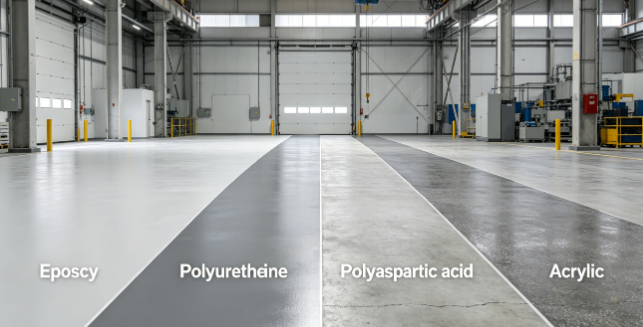
Epoxy Coating: A Popular Choice for Heavy-Duty Environments
Epoxy coatings are widely used across industrial and commercial spaces due to their strength and versatility.
- Exceptional durability:
Epoxy forms a rigid and highly durable surface that can withstand heavy machinery, forklifts, and constant foot traffic. This makes it ideal for warehouses, factories, and logistics centers where floors experience continuous stress. - Strong adhesion to concrete:
One of epoxy’s key advantages is its ability to bond tightly with concrete substrates. This ensures long-lasting performance without peeling or delamination when properly applied. - Chemical resistance:
Epoxy coatings offer protection against oils, solvents, and mild chemicals, making them suitable for manufacturing facilities and workshops where spills are common. - Limitations to consider:
While epoxy is strong, it can become brittle in environments with significant temperature fluctuations or UV exposure, which may lead to cracking over time.
Polyurethane Coating: Flexibility and UV Stability
Polyurethane coatings are often chosen for environments that require flexibility and resistance to environmental changes.
- High elasticity and impact resistance:
Unlike epoxy, polyurethane can absorb impacts and adapt to slight substrate movements without cracking, making it suitable for areas with vibration or thermal expansion. - Excellent UV resistance:
This type of coating maintains its color and finish even when exposed to sunlight, making it a great option for outdoor or semi-outdoor commercial spaces. - Abrasion resistance:
Polyurethane performs well in environments with constant movement, such as retail stores or parking facilities, where surface wear is a concern. - Application considerations:
It may require more precise installation conditions, and the cost is typically higher than standard epoxy systems.
Polyaspartic Coating: Fast Installation and High Performance
Polyaspartic coatings are gaining popularity due to their rapid curing time and advanced performance features.
- Quick curing process:
One of the standout benefits is the ability to cure within hours, allowing facilities to resume operations quickly with minimal downtime. - Wide temperature application range:
These coatings can be applied in both low and high temperatures, making them suitable for projects with tight schedules or challenging environments. - Durability and chemical resistance:
Polyaspartic systems provide strong protection against abrasion, moisture, and chemical exposure, making them versatile for both industrial and commercial use. - Higher upfront investment:
Although more expensive initially, the reduced downtime and long lifespan often justify the cost over time.
Acrylic Coating: Cost-Effective for Light-Duty Applications
Acrylic coatings are commonly used in commercial spaces where heavy-duty performance is not the primary requirement.
- Affordable solution:
Acrylic coatings are generally more budget-friendly, making them suitable for large areas with limited budgets. - Ease of application:
They are relatively simple to apply and dry quickly, reducing installation time. - Moderate protection:
While not as durable as epoxy or polyurethane, acrylic coatings still provide basic resistance to wear and environmental exposure. - Best use cases:
Ideal for light-traffic areas such as offices, showrooms, or decorative commercial spaces where aesthetics are important.
How to Choose the Best Floor Coating Based on Your Needs
Selecting the right coating depends on multiple factors related to your specific environment and operational demands.
- Evaluate traffic and load requirements:
Heavy industrial environments typically benefit from epoxy or polyaspartic coatings, while lighter commercial spaces may use acrylic or polyurethane options. - Consider environmental exposure:
Areas exposed to sunlight, moisture, or chemicals require coatings with specialized resistance properties. - Balance cost and long-term value:
While initial cost is important, durability, maintenance needs, and lifespan should also be considered to determine overall cost-effectiveness. - Consult industry professionals:
Experienced floor coating suppliers can assess your facility and recommend the most suitable system based on technical requirements and budget.
Conclusion
There is no one-size-fits-all solution when it comes to selecting the best floor coating for industrial and commercial use. Each type—epoxy, polyurethane, polyaspartic, and acrylic—offers unique advantages tailored to specific environments and performance needs. By understanding these differences and working with trusted floor coating suppliers, businesses can implement flooring systems that enhance durability, safety, and operational efficiency. Investing in the right coating not only protects your floors but also supports long-term productivity and cost savings.
0