Ficus trees are a type of evergreen tree belonging to the Moraceae family, widely distributed in tropical and subtropical regions. They are well known for their aerial roots and dense foliage, making them popular as both landscape trees and potted plants. Among them, Chinese ficus is one of the most common indoor ornamental ficus trees, valued for its shade tolerance and ease of care. However, the ficus family includes many other species as well. Whether in large tree forms or small potted versions, ficus trees can bring greenery and a natural touch to any environment.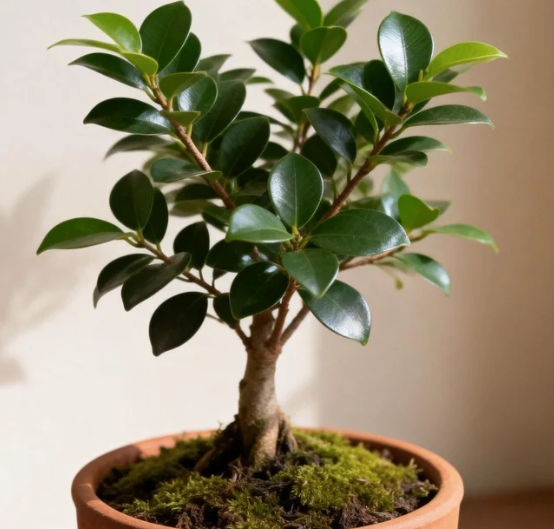
1. Growth Characteristics of Ficus Trees
- Tree Shape and Leaves
Ficus trees generally have smooth, sturdy trunks. Some species develop aerial roots from their branches that naturally hang down to the ground, creating a distinctive visual effect. Their leaves are thick and deep green; some have smooth edges while others are slightly wavy, helping to reduce evaporation and resist disease. The leaves of Chinese ficus are glossy and compact, making it particularly suitable for bonsai shaping and indoor decoration.
- Growing Environment
Ficus trees prefer warm, humid conditions and bright but indirect sunlight. The soil should be loose, well-draining, and rich in organic matter. Many ficus species are shade-tolerant and can adapt to low-light indoor environments, though insufficient light will slow growth. The ideal temperature range is 18°C to 30°C, while temperatures below 10°C may cause cold damage.
2. How to Care for Ficus Trees
- Watering and Humidity
Ficus trees enjoy moisture but should not sit in waterlogged soil. Keep the soil slightly damp, especially during the spring and summer growth period, while avoiding prolonged dryness or flooding. In dry indoor environments, misting can increase air humidity and promote healthy leaf growth. Potted Chinese ficus requires careful water management to prevent root rot.
- Light and Fertilization
Ficus trees need moderate sunlight. Indoor plants should be placed near bright windows, while outdoor trees should be protected from harsh direct sunlight. During the growing season, apply a balanced liquid fertilizer monthly to provide nitrogen, phosphorus, and potassium, promoting lush foliage and strong branch growth. Fertilization should be adjusted according to the tree’s age and growth rate.
- Pruning and Pest Control
Regularly prune dead or diseased branches to maintain an attractive shape. Common pests and diseases include leaf spot, aphids, and spider mites. These can be managed with warm water rinses or low-concentration soap sprays. Ensuring good ventilation reduces disease incidence and encourages healthy photosynthesis and growth.
3. Uses and Value of Ficus Trees
Ficus trees are not only ornamental but also widely used in landscaping, bonsai art, and ecological restoration. Their aerial roots and unique tree shapes create natural scenery, while dense foliage helps purify the air and absorb carbon dioxide. As an indoor ficus representative, Chinese ficus combines aesthetic appeal with practicality, making it ideal for homes and offices. Additionally, ficus trees symbolize resilience and vitality, giving them cultural significance.
4. Conclusion
Ficus trees are highly adaptable and visually appealing plants that beautify the environment and improve air quality. With proper watering, light management, fertilization, and pruning, ficus trees can thrive and develop unique forms. Whether grown as large outdoor trees or small indoor pots, they add a natural atmosphere to any space. Chinese ficus, as a representative species, stands out for its shade tolerance and ease of care, making it a perfect choice for indoor greenery in homes and offices.
0