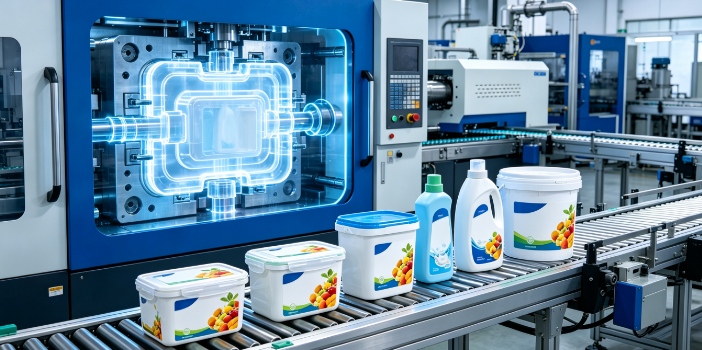
In modern packaging and manufacturing industries, brands are constantly seeking technologies that improve both product performance and visual appeal. One of the most effective solutions is in mold labeling, a process where the label is fused directly into the product during injection molding rather than applied afterward. This integration makes the label part of the final product structure, improving resistance to wear while also enhancing aesthetic quality. Compared with traditional labeling methods, in mold labeling offers a more durable and premium finish, making it widely used in food packaging, household goods, and industrial containers. As competition increases, companies are turning to this method to achieve stronger branding and longer product life cycles.
1. Improved Surface Durability Through Integrated Labeling
One of the main advantages of in mold labeling is its ability to significantly improve product durability. Because the label becomes part of the molded surface, it is protected from external damage.
- The label is resistant to scratches caused by friction during transportation and daily use.
- It withstands moisture, oil, and chemical exposure, making it suitable for harsh environments.
- It does not peel or fade easily, even after long-term handling or washing cycles.
- The fused structure prevents label detachment, ensuring long-lasting product identification.
This level of protection ensures that packaging remains intact throughout the product’s lifecycle.
2. Enhanced Visual Appeal and Branding Impact
Another important benefit of in mold labeling is its ability to create visually appealing packaging that strengthens brand identity.
- Seamless integration creates a smooth, high-quality surface without visible edges.
- Full-surface printing allows for vibrant colors and complex graphic designs.
- Matte or glossy finishes can be customized to match brand positioning.
- High-resolution printing improves product shelf visibility and customer attraction.
Through these visual improvements, brands can achieve stronger recognition and better market competitiveness.
3. Increased Production Efficiency and Consistency
From a manufacturing perspective, in mold labeling also improves efficiency and reduces production errors.
- Eliminates the need for post-labeling processes, reducing labor costs and time consumption.
- Ensures consistent label positioning, avoiding misalignment or wrinkling issues.
- Integrates labeling and molding into a single automated process, improving production speed.
- Reduces material waste by combining decoration and forming in one step.
This streamlined process helps manufacturers achieve higher output with more stable quality control.
4. Eco-Friendly and Cost-Effective Packaging Solution
Sustainability is another key advantage of in mold labeling, making it a preferred choice for environmentally conscious industries.
- The process uses recyclable materials, reducing environmental impact.
- It eliminates adhesive use, avoiding chemical waste and contamination.
- Long-lasting labels reduce the need for re-labeling or replacement packaging.
- Optimized production cycles help lower overall energy consumption and operational costs.
These benefits make it a cost-efficient and eco-friendly packaging method for large-scale production.
5. Strong Resistance in Real-World Applications
In practical use, in mold labeling performs well across different industries due to its durability and stability.
- Food and beverage containers maintain label clarity even under refrigeration or heating conditions.
- Household products resist scratches and detergent exposure during cleaning.
- Industrial containers remain readable in outdoor or heavy-duty environments.
- Cosmetic packaging retains a premium appearance despite frequent handling.
This versatility makes it suitable for a wide range of commercial applications.
Conclusion
In summary, in mold labeling enhances product durability and appearance by combining decoration and molding into a single integrated process. It improves resistance to physical damage, strengthens visual branding, increases production efficiency, and supports sustainable manufacturing practices. With its ability to deliver both functional and aesthetic advantages, in mold labeling has become a key technology for modern packaging solutions and continues to play an important role in helping brands stand out in competitive markets.
0