As network speeds continue to increase and fiber density becomes more complex, structured cabling solutions play a key role. The 24F MTP trunk cable has become an important component in high-density fiber optic networks due to its ability to simplify installation and improve overall cable organization.
Simplifying High-Density Fiber Connections
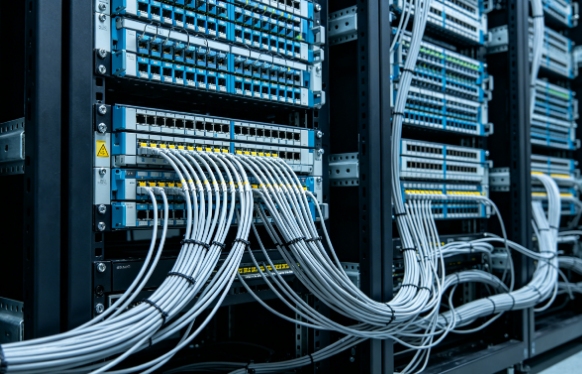
One of the main advantages of the 24F MTP trunk cable is its ability to consolidate multiple fiber connections into a single, compact assembly. Instead of handling numerous individual fiber cables, technicians can deploy one trunk cable that contains multiple fibers in a structured format. This significantly reduces cable clutter within racks and patch panels, making the entire system neater, more organized, and easier to manage.
By reducing the number of individual cables, data centers can improve airflow and reduce physical congestion, which is essential for maintaining optimal operating temperatures and equipment performance.
Improving Installation Efficiency
Installation time is a major factor in large-scale data center projects. The 24F MTP trunk cable is designed to support plug-and-play connectivity, which simplifies deployment and reduces labor requirements. Pre-terminated connectors eliminate the need for on-site fiber splicing, allowing technicians to install systems more quickly and with fewer errors.
This streamlined installation process not only saves time but also reduces the risk of connection issues caused by improper termination. As a result, network deployment becomes faster, more reliable, and more cost-efficient.
Enhancing Cable Organization and Maintenance
Effective cable management is not only about installation but also about long-term maintenance. A well-organized fiber system makes it easier to identify, trace, and replace cables when needed. The 24F MTP trunk cable helps achieve this by grouping fibers into a single structured unit, reducing the complexity of cable routing.
In case of troubleshooting or upgrades, technicians can quickly locate specific connections without disturbing the entire network. This improves operational efficiency and minimizes downtime, which is especially important in environments where continuous service is required.
Supporting High-Density Network Environments
Modern data centers are increasingly moving toward high-density architectures to support 40G, 100G, and even higher-speed networks. The 24F MTP trunk cable is specifically designed to meet these demands by providing high fiber count in a compact form factor.
Its multi-fiber structure allows for efficient use of space within cable trays and rack systems. This is particularly valuable in environments where physical space is limited, but network capacity requirements are continuously growing. By optimizing space usage, data centers can scale their infrastructure more effectively.
Reducing Cable Management Costs
Poor cable management can lead to higher operational costs due to increased maintenance time and potential system downtime. The 24F MTP trunk cable helps reduce these costs by simplifying both installation and ongoing management.
With fewer individual cables to organize and maintain, IT teams can spend less time on manual cable handling and more time focusing on system optimization. Additionally, improved organization reduces the likelihood of errors, which can prevent costly network disruptions.
Improving System Scalability and Flexibility
Scalability is a key requirement for modern data center infrastructure. The 24F MTP trunk cable supports flexible network expansion by allowing additional connections to be integrated without major restructuring. Its modular design makes it easier to upgrade systems as bandwidth demands increase.
This flexibility ensures that data centers can adapt to future technological changes without requiring complete cabling overhauls, making it a future-ready solution for evolving network environments.
Conclusion
The 24F MTP trunk cable plays a vital role in improving data center cable management by simplifying installation, enhancing organization, and supporting high-density network environments. Its structured design reduces clutter, improves airflow, and increases operational efficiency. With benefits in scalability, maintenance, and cost control, it has become an essential solution for modern fiber optic infrastructure.
0