In today’s rapidly advancing industrial landscape, automation is no longer limited to simple repetitive tasks. Manufacturers across different sectors are adopting advanced robotic systems to improve precision, efficiency, and scalability. Among these technologies, the 5 axis robot arm stands out as a highly flexible and accurate solution capable of handling complex multi-directional operations. Its ability to move across multiple axes allows industries to perform tasks that require both high precision and adaptability. As a result, it has become an essential tool in modern smart manufacturing environments where quality and efficiency are equally important.
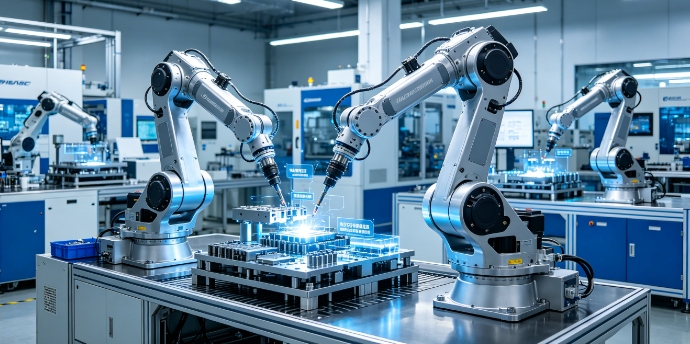
Aerospace Industry: High-Precision Manufacturing and Assembly
The aerospace industry is one of the biggest beneficiaries of the 5 axis robot arm, primarily due to its strict requirements for precision, safety, and structural integrity.
- Aircraft components often involve complex geometries and lightweight materials such as titanium and composite alloys, which require highly accurate machining to meet strict engineering standards.
- The robot arm can perform multi-angle drilling, cutting, and surface finishing without needing to reposition the part, reducing cumulative alignment errors.
- In assembly processes, it ensures consistent torque application and precise component placement, which is critical for flight safety.
- Its ability to maintain stable accuracy over long production cycles makes it ideal for manufacturing high-value aerospace parts such as turbine blades and structural frames.
Reducing human error and improving repeatability, it helps aerospace manufacturers maintain extremely tight tolerances.
Automotive Industry: Efficiency and Mass Production Optimization
The automotive industry relies heavily on automation, and the 5 axis robot arm plays a key role in improving production efficiency and consistency across large-scale manufacturing lines.
- It is widely used in welding, painting, component assembly, and precision machining of engine parts.
- Multi-axis movement allows the robot to access hard-to-reach areas of vehicle structures, improving weld quality and coating uniformity.
- In engine manufacturing, it ensures precise machining of components such as cylinder heads and transmission parts, where micrometer-level accuracy is required.
- High-speed repeatable operations help automotive factories maintain mass production output without sacrificing quality control.
This combination of speed and precision makes it a core technology in modern automotive production systems.
Electronics and Semiconductor Industry: Micro-Precision Handling
In electronics manufacturing, even the smallest deviation can affect product performance. The 5 axis robot arm provides the micro-level accuracy required for assembling and handling delicate components.
- It is used in PCB assembly, chip placement, and micro-soldering processes where precision is critical.
- The robot can manipulate extremely small components without causing damage, thanks to controlled force and motion stability.
- Vision systems integrated with the robot allow precise alignment of electronic parts during assembly.
- It also improves production consistency in high-volume manufacturing of smartphones, computers, and consumer electronics.
Because of its precision and stability, it significantly reduces defect rates in sensitive electronic production environments.
Medical Device Industry: Clean, Accurate, and Controlled Manufacturing
The medical device industry demands not only precision but also strict hygiene and reliability standards. The 5 axis robot arm helps manufacturers meet these requirements effectively.
- It is commonly used in producing surgical instruments, implants, and diagnostic equipment.
- The robot ensures precise machining of medical-grade materials such as stainless steel and biocompatible polymers.
- Automated handling reduces human contact, improving cleanliness and reducing contamination risks.
- It supports complex geometrical designs required for modern medical devices, such as minimally invasive surgical tools.
Its ability to maintain accuracy while meeting strict regulatory standards makes it essential in medical manufacturing.
Aerospace and Defense: Complex Structural Fabrication
Beyond commercial aerospace, the defense sector also relies heavily on the 5 axis robot arm for advanced manufacturing tasks involving complex and high-strength materials.
- It is used in fabricating armored components, radar structures, and missile system parts that require extreme durability and precision.
- Multi-axis machining allows efficient production of irregular shapes that are difficult to achieve using conventional machines.
- The robot supports high-strength material processing, including hardened alloys and composite materials.
- It improves repeatability in defense manufacturing, ensuring consistent performance across critical components.
These capabilities make it a strategic asset in high-security and high-performance production environments.
Conclusion
The 5 axis robot arm benefits a wide range of industries, including aerospace, automotive, electronics, medical devices, and defense manufacturing. Its ability to deliver high precision, multi-directional flexibility, and consistent performance makes it a key technology in modern industrial automation. As manufacturing continues to evolve toward smarter and more efficient systems, the role of multi-axis robotic solutions will become even more important in supporting complex production requirements and maintaining global competitiveness.
0