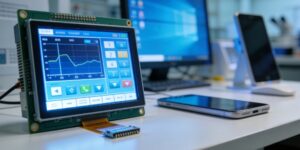
With the continuous evolution of display technology, the glasses free 3d display has gradually moved from experimental innovation to practical application across multiple industries. By enabling users to experience three-dimensional visuals without wearing special glasses, this technology has opened new possibilities for visual communication, advertising, education, and professional design. Unlike traditional 3D systems that require wearable devices, glasses-free solutions rely on optical techniques such as lenticular lenses or parallax barriers to create depth perception directly on the screen. As adoption increases, understanding where glasses-free 3D displays are commonly used today helps reveal their growing impact on modern digital environments.
Advertising and Digital Signage Applications
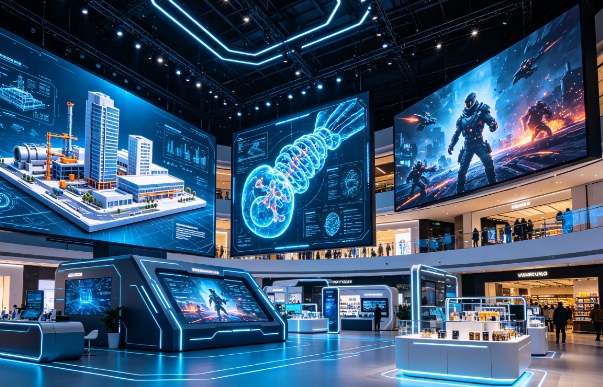
One of the most widespread uses of glasses free 3d display is in advertising and public display systems, where visual impact is essential for capturing attention.
- High-impact visual attraction: 3D visuals stand out more effectively than traditional flat posters, helping brands attract viewers in crowded environments such as malls and airports.
- Dynamic product promotion: Retailers use 3D displays to showcase products more realistically and engagingly, improving customer interest and purchase intent.
- Interactive advertising experiences: Some systems combine motion tracking or touch features, allowing users to explore content in a more immersive format.
- Brand differentiation: Companies adopt glasses-free 3D screens to create a modern and innovative brand image that stands out from competitors.
These advantages make advertising one of the earliest and strongest commercial adoption areas for this technology.
Education and Training Environments
The glasses free 3d display is also increasingly used in education, where visual clarity and engagement play a key role in learning effectiveness.
- Scientific visualization: Complex subjects such as biology, chemistry, and physics can be displayed in 3D, making abstract concepts easier to understand.
- Medical training applications: Anatomy models and surgical simulations benefit from realistic depth representation, improving student comprehension.
- Engineering education: Mechanical structures and architectural designs can be viewed in spatial form, helping learners analyze components more effectively.
- Interactive classroom systems: Teachers can present lessons more engagingly, increasing student participation and attention.
This makes glasses-free 3D technology a powerful educational tool for modern learning environments.
Retail, Exhibition, and Commercial Display
In commercial spaces, the glasses free 3d display is widely used to enhance customer experience and improve product presentation.
- Product showcase enhancement: Items such as electronics, fashion, and luxury goods are displayed in 3D to highlight design details and features.
- Trade show and exhibition booths: Companies use 3D displays to create visually striking presentations that attract visitors and generate interest.
- Immersive shopping experience: Customers can view products from multiple angles, improving decision-making confidence.
- Space-saving presentation: Instead of physical samples, digital 3D models reduce storage and display costs while maintaining visual appeal.
These applications demonstrate how 3D visualization improves commercial communication and customer engagement.
Industrial Design, Engineering, and Visualization
Professional industries also benefit significantly from glasses-free 3D display technology, especially in design and technical visualization workflows.
- Product design review: Designers can evaluate prototypes in realistic depth without needing physical models.
- Architectural planning: Building layouts and urban designs are easier to interpret in three-dimensional space.
- Engineering simulation: Mechanical structures and system models can be analyzed more intuitively.
- Data visualization: Complex datasets can be transformed into spatial representations for better understanding.
These use cases highlight how the technology supports precision, efficiency, and better decision-making in professional environments.
Entertainment and Media Industry
The entertainment industry is another important area where glasses free 3d display is gaining traction.
- Gaming experiences: 3D visuals enhance immersion by creating more realistic environments and character depth.
- Film and animation previews: Studios use glasses-free displays for editing, review, and presentation purposes.
- Theme parks and attractions: Interactive 3D installations create engaging visitor experiences.
- Digital art exhibitions: Artists showcase works with enhanced depth and visual impact.
As content creation evolves, demand for more immersive viewing experiences continues to grow.
Conclusion
In conclusion, the glasses free 3d display is now widely used across advertising, education, retail, industrial design, and entertainment sectors. Its ability to deliver immersive 3D visuals without requiring special eyewear makes it highly practical and accessible in both commercial and professional environments. Despite the persistence of challenges such as limitations in perspective and production costs, the scope of its application continues to expand alongside the continuous advancement of technology. Overall, glasses-free 3D displays are becoming an important tool in modern visual communication, reshaping how people interact with digital content across multiple industries.
0