As consumers become more conscious about food safety and material quality, many people are comparing different types of tableware to determine which is safer for daily use. One common question is whether melamine is healthier than standard plastic. Both materials are widely used in modern dining environments, but they differ significantly in composition, performance, and safety characteristics. For businesses sourcing products such as wholesale melamine dinnerware, understanding these differences is essential to meet both regulatory standards and consumer expectations. While melamine offers improved durability and heat resistance compared to ordinary plastics, proper usage and manufacturing quality remain key factors in determining overall safety.
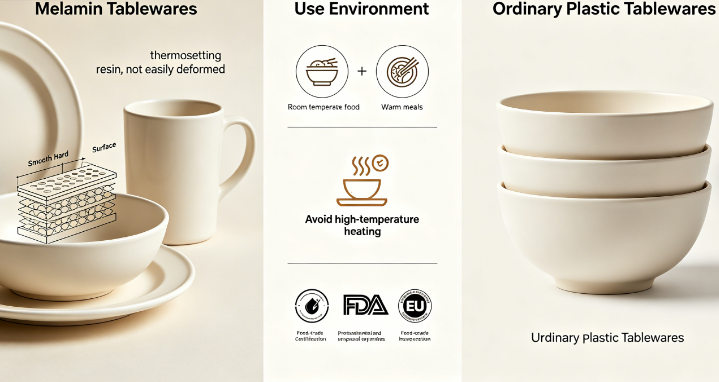
Material Composition and Structural Differences
Understanding whether melamine is healthier than plastic starts with examining how these materials are made:
- Melamine resin structure
Melamine tableware is produced from melamine-formaldehyde resin, a thermosetting plastic that becomes rigid and stable after high-temperature molding. This structure gives it a hard, non-porous surface that resists deformation. - Common plastic materials
Standard plastic tableware is typically made from polypropylene (PP), polyethylene (PE), or other thermoplastics. These materials are softer and may deform under heat, especially in lower-quality products. - Key structural distinction
Unlike regular plastics, melamine does not melt once formed. This makes it more heat-resistant and less likely to warp, which contributes to its perceived safety advantage in many dining scenarios.
Safety Performance in Daily Use
The health aspect of tableware depends largely on how materials behave under normal usage conditions:
- Chemical stability under normal temperatures
Melamine is generally stable when used with cold or moderately warm foods. It does not easily release harmful substances when used correctly, making it suitable for daily dining. - Heat-related limitations
While more heat-resistant than standard plastic, melamine should not be used in microwaves or exposed to extremely high temperatures. Improper use may lead to material deterioration. - Plastic safety variability
Some plastics are microwave-safe and designed for high-temperature use, but low-quality plastic products may release chemicals when heated. Therefore, safety depends heavily on material grade and certification.
Durability and Long-Term Health Considerations
Durability plays an indirect but important role in determining the safety and hygiene of tableware:
- Resistance to scratches and damage
Melamine has a harder surface that resists scratches better than many plastics. Fewer surface scratches mean fewer places for bacteria to accumulate. - Longer product lifespan
Because melamine is less prone to cracking or breaking, it maintains its structural integrity over time, reducing the need for frequent replacement. - Plastic wear and tear risks
Softer plastics can develop scratches more easily, which may affect hygiene if not properly maintained.
Regulations, Certifications, and Quality Standards
Safety is not only determined by material type but also by manufacturing standards:
- Food-grade certification requirements
High-quality melamine products must meet strict standards such as FDA or EU food-contact regulations. These certifications ensure that the material is safe for everyday use. - Importance of manufacturing quality
Products from reliable suppliers are tested for chemical migration and durability. Businesses sourcing wholesale melamine dinnerware should prioritize certified manufacturers to ensure compliance. - Plastic product regulation differences
Plastic tableware also follows safety regulations, but quality can vary widely depending on the manufacturer and intended use.
Practical Usage Guidelines for Safety
Regardless of material choice, proper usage is essential to maintain safety and extend product lifespan:
- Avoid extreme heat exposure
Melamine should not be used in ovens or microwaves, while certain plastics may tolerate heat depending on their type. - Use appropriate cleaning methods
Gentle cleaning helps maintain surface integrity for both materials, reducing wear and potential contamination risks. - Replace damaged products promptly
Any tableware showing cracks, discoloration, or surface damage should be replaced to ensure safe food contact conditions.
Conclusion
In conclusion, melamine can be considered a safer and more durable option than many standard plastics when used correctly. Its rigid structure, resistance to wear, and stability under normal conditions make it well-suited for everyday dining. However, it is not inherently superior in all situations, as improper use—such as exposure to high heat—can affect its safety. When compared to plastic, the overall health factor depends on material quality, certifications, and correct usage practices. For businesses and consumers alike, choosing high-quality products, including wholesale melamine dinnerware, and following proper usage guidelines are the most effective ways to ensure safe and reliable dining experiences.
0