
Epoxy floor coatings are widely used in garages, commercial buildings, warehouses, and industrial spaces due to their seamless, durable, and high-performance surface. They provide exceptional resistance to chemicals, abrasion, moisture, and heavy traffic, far surpassing traditional floor paints or sealers. The coating not only protects the underlying concrete but also enhances the floor’s appearance with a polished, professional finish. However, the effectiveness and lifespan of epoxy floor coatings depend largely on proper installation. Without correct preparation and careful application, the coating can peel, bubble, or wear unevenly, reducing both functional and aesthetic benefits. Understanding the full application process ensures a floor that performs reliably and looks professional for years.
Surface Preparation
Proper surface preparation is the most critical step when applying epoxy floor coatings. The concrete floor must be clean, dry, and structurally sound. All dust, dirt, oil, grease, or debris should be removed using sweeping, vacuuming, and degreasing cleaners. Any old paint, sealers, or damaged concrete must be stripped, ground, or patched with concrete fillers to create a smooth, level surface. Many professionals recommend grinding or acid-etching the surface to slightly roughen it and open its pores, which improves adhesion. Thorough surface preparation prevents common problems such as peeling, bubbling, or uneven curing and sets the foundation for a strong, long-lasting epoxy coating.
Primer and Epoxy Application
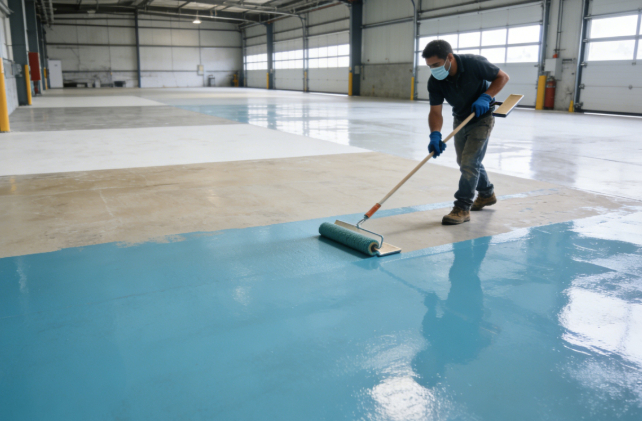
After preparing the floor, a primer is applied to seal minor pores and enhance adhesion for the main epoxy layer. The primer is rolled evenly in a thin, consistent layer and allowed to cure completely. Once the primer is dry, the resin and hardener components of the epoxy are carefully mixed according to the manufacturer’s instructions. The epoxy must be applied promptly using rollers, brushes, or squeegees to ensure uniform coverage. Decorative flakes or anti-slip additives can be broadcast onto the wet epoxy for both safety and visual enhancement. Applying the epoxy methodically in sections ensures a smooth, even finish without bubbles or streaks, which is essential for both durability and aesthetics.
Protective Topcoat
After the main epoxy layer has cured, applying a protective topcoat is essential to maximize the durability and lifespan of epoxy floor coatings. This layer provides an extra barrier against damage while enhancing the floor’s appearance. Key considerations for applying the topcoat include:
- Improved Scratch and Wear Resistance: The topcoat shields the epoxy from scratches caused by foot traffic, machinery, or moving furniture, significantly reducing surface wear over time.
- Chemical and Stain Protection: It offers an additional layer of defense against chemicals, oils, and spills, preventing stains and maintaining the floor’s clean, professional look.
- UV and Sunlight Resistance: Certain topcoat formulations protect the epoxy from yellowing or fading when exposed to direct sunlight, which is especially important for areas with natural light exposure.
- Application Method: The topcoat should be applied evenly in a thin, uniform layer using a roller, brush, or squeegee. Uneven application can lead to streaks, pooling, or inconsistent curing.
- Curing Time: After application, the floor must be left undisturbed for the manufacturer-recommended curing period. Proper curing ensures the topcoat fully hardens, achieving maximum strength, durability, and chemical resistance.
- Maintenance Benefits: A well-applied topcoat makes cleaning easier, repels dust and debris, and helps maintain the epoxy floor coatings’ glossy finish for years.
By following these steps carefully, the protective topcoat not only preserves the performance and appearance of epoxy floor coatings but also extends their functional lifespan, ensuring a floor that looks professional and stands up to heavy use.
Conclusion
Applying epoxy floor coatings requires careful attention to each stage: thorough surface preparation, primer application, main epoxy installation, protective topcoat, and proper curing. Each step contributes to achieving a durable, high-performance, and visually attractive floor. When executed correctly, epoxy floor coatings provide a seamless and long-lasting flooring solution suitable for residential, commercial, and industrial spaces. They combine strength, chemical resistance, and aesthetic appeal in a single system, delivering both practical functionality and a polished, professional finish that can endure heavy use and maintain its quality over time.
0