Public spaces such as shopping malls, airports, hospitals, schools, and office buildings require strict hygiene management to ensure the health and safety of large numbers of users. One of the most effective tools in maintaining hand hygiene is the modern soap dispensing system. Compared with traditional soap bars or shared containers, a well-designed soap dispenser significantly reduces contamination risks and improves overall cleanliness. By controlling how soap is accessed and used, it helps minimize direct contact, prevent cross-infection, and promote consistent handwashing behavior. Many facility managers also cooperate with a professional soap dispenser manufacturer to ensure that hygiene standards meet the demands of high-traffic environments.
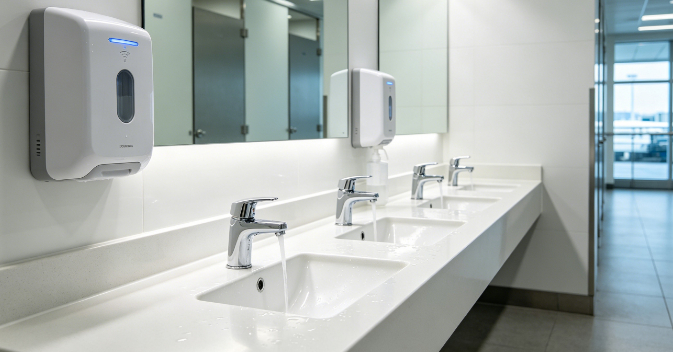
Touchless Operation Reduces Cross-Contamination Risks
One of the most important hygiene benefits of a soap dispenser in public spaces is its ability to reduce physical contact, which is a major source of germ transmission.
Key advantages include:
- Infrared sensor activation: Automatic dispensers detect hand movement and release soap without the need to touch any surface, significantly reducing bacteria transfer.
- Reduced surface contamination: Fewer touchpoints mean less buildup of germs on frequently used bathroom equipment.
- Consistent hygiene experience: Every user interacts with a clean, non-contact system, improving overall sanitation standards in shared environments.
This touch-free technology is especially important in hospitals, food service areas, and transportation hubs where hygiene control is critical.
Controlled Soap Dispensing Encourages Proper Handwashing
Proper hand hygiene requires not only soap availability but also correct usage. A soap dispenser helps regulate the amount of soap dispensed, ensuring effective cleaning while avoiding waste.
Important points include:
- Fixed dosage output: Each activation delivers a consistent amount of soap, ensuring users apply enough for proper handwashing.
- Prevention of overuse: Controlled dispensing avoids excessive soap usage, which can lead to messy sinks and waste buildup.
- Improved washing efficiency: Standardized soap amounts encourage users to follow proper handwashing duration and technique.
- Reduced slip hazards: Less spilled soap around sinks lowers the risk of slippery surfaces in public washrooms.
By guiding user behavior, dispensers indirectly improve hygiene compliance in busy environments.
Cleaner Restroom Environments Through Reduced Mess
Public restrooms often suffer from soap spills, residue buildup, and dirty surfaces when unmanaged soap containers are used. Modern dispensing systems help maintain a cleaner environment overall.
Key improvements include:
- No direct soap handling: Users do not touch or squeeze shared soap containers, reducing mess and contamination spread.
- Anti-drip design systems: Many dispensers are engineered to prevent leakage after use, keeping sink areas clean.
- Wall-mounted installation benefits: Elevated placement reduces contact with wet surfaces and prevents accidental contamination.
- Easier cleaning procedures: Facility staff can maintain restrooms more efficiently due to reduced soap residue buildup.
These features collectively contribute to a more hygienic and visually clean public restroom environment.
Durable Design and Hygiene Stability in High-Traffic Areas
In public spaces with heavy foot traffic, hygiene equipment must be both durable and reliable. Soap dispensers are designed to maintain performance even under continuous use.
Key characteristics include:
- High-capacity storage tanks: Large soap reservoirs reduce frequent refilling, minimizing handling and contamination risk during maintenance.
- Sturdy material construction: Stainless steel or reinforced plastic ensures long-term durability and resistance to wear.
- Stable dispensing performance: Even with heavy usage, dispensers maintain consistent output without clogging or malfunction.
- Reduced maintenance contact: Fewer refilling cycles mean less human contact, which helps maintain hygiene consistency.
Many facility planners work with a soap dispenser manufacturer to customize dispenser durability based on usage intensity and environmental conditions.
Conclusion
A soap dispenser plays a vital role in improving hygiene in public spaces by reducing cross-contamination through touchless operation, promoting proper handwashing through controlled dispensing, and maintaining cleaner restroom environments. Its durable design ensures stable performance even in high-traffic areas, reducing maintenance-related contamination risks. By combining hygiene control, user behavior guidance, and operational efficiency, modern soap dispensing systems have become an essential component of public health infrastructure. With proper planning and collaboration with experienced suppliers, public facilities can significantly enhance sanitation standards and create safer environments for all users.
0