The ficus s shape plant is a popular ornamental choice for indoor decoration and landscape design due to its elegant curved trunk and lush green foliage. Many plant owners choose it for homes, offices, hotels, and commercial spaces where aesthetic value and natural atmosphere are important. However, one common concern is whether this plant can survive in low light or fully indoor environments. Since it is originally a tropical plant that prefers bright conditions, its adaptability to reduced light levels depends on how well its environment is managed. Understanding its light requirements, growth behavior, and indoor care strategies is essential for maintaining a healthy ficus s shape plant indoors.
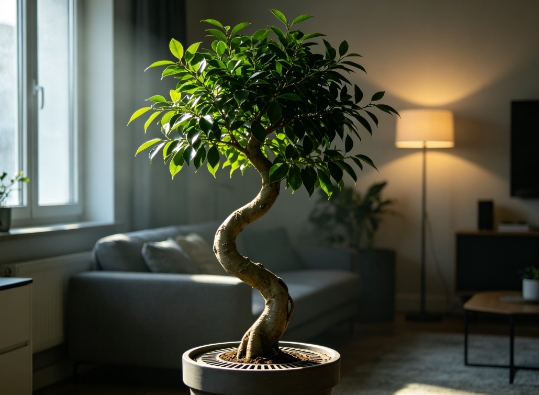
Light Requirements and Indoor Adaptability
Light is the most critical factor affecting whether a ficus s shape plant can thrive indoors or in low-light environments.
- Preference for bright indirect light: The plant performs best when placed near windows where it receives filtered sunlight rather than direct harsh rays.
- Tolerance to moderate indoor lighting: It can survive in indoor spaces with artificial lighting, but growth may slow compared to brighter environments.
- Low-light limitations: In very dim areas, the plant may experience leaf drop, weak stems, or uneven growth along the curved trunk.
- Light direction influence: Even indoors, the plant will grow toward the nearest light source, which can affect the symmetry of the S shape if not adjusted.
Overall, while the ficus’s shape can survive indoors, adequate light exposure is necessary to maintain its structure and healthy appearance.
Growth Behavior in Indoor Conditions
Indoor environments can significantly influence how a ficus’ shape develops over time, especially in terms of shape stability and foliage density.
- Slower growth rate: Compared to outdoor conditions, indoor plants typically grow more slowly due to reduced light intensity and airflow.
- Leaf density changes: Insufficient light may cause the plant to produce fewer leaves or smaller foliage, reducing its decorative value.
- Directional growth tendency: The trunk and branches may lean toward windows or light sources, requiring periodic correction.
- Energy conservation response: In low light, the plant prioritizes survival over expansion, which can affect the fullness of the canopy.
These growth behaviors show that indoor survival is possible, but shape maintenance requires regular care and adjustment.
Indoor Care Strategies for Healthy Survival
To help a ficus s shape plant survive and remain attractive indoors, proper care routines must be followed consistently.
- Rotation for balanced exposure: Turning the plant every few days ensures all sides receive equal light, preventing uneven growth.
- Supplemental lighting use: In darker rooms, LED grow lights can help simulate natural sunlight and support healthy photosynthesis.
- Controlled watering routine: Indoor plants require less water than outdoor ones, so watering should only be done when the soil is partially dry.
- Humidity maintenance: Indoor air can be dry, so occasional misting or humidity trays can help maintain leaf freshness.
These practices significantly improve the plant’s chances of thriving in indoor or low-light conditions.
Soil, Pot, and Environmental Considerations
The survival of a ficus s shape plant indoors also depends on the physical growing environment, including soil quality and container setup.
- Well-draining soil mix: A combination of loam, peat, and sand helps prevent water retention and root rot in indoor conditions.
- Proper pot selection: Containers with drainage holes are essential to avoid excess moisture buildup.
- Air circulation importance: Even indoors, moderate airflow helps prevent fungal growth and supports healthier foliage.
These environmental factors ensure that the plant remains stable even when natural light is limited.
Common Indoor Challenges and Solutions
Although S-shaped Ficus trees can survive indoors, they may face several challenges that require proactive management measures.
- Leaf drop due to low light: If leaves begin falling, relocating the plant closer to a light source or using artificial lighting can help.
- Loss of S shape definition: Uneven growth may distort the curved structure, requiring pruning and repositioning.
- Pest development in indoor spaces: Low airflow environments may encourage pests such as spider mites, which should be treated early.
- Overwatering risks: Indoor plants are more prone to root rot if watering is not carefully controlled.
Addressing these issues promptly helps maintain both plant health and decorative value.
Conclusion
The ficus s shape plant can survive in low light or indoor environments, but its long-term health and appearance depend heavily on proper care and environmental management. While it can adapt to reduced light conditions, insufficient brightness may affect growth rate, leaf density, and structural balance. By providing indirect light, supplementing with artificial lighting when needed, and maintaining proper watering and pruning routines, the plant can continue to thrive indoors. Ultimately, with the right care strategy, the ficus’s shape remains a highly decorative and adaptable plant suitable for indoor environments, even when natural light is limited.
0