Global competition in clean energy is revolutionizing the energy industry. Solar energy, wind energy, electric cars (EVs), and batteries are becoming decisive factors not only for carbon emissions but also for energy security, competitiveness, and foreign trade.
China, for instance, has positioned itself in the clean energy industry through developing its industrial and renewable energy capacity. The United States, on the other hand, benefits from its research institutions, high-tech companies, and venture capitalists.
However, there is no single measure of the clean energy advantage. Installed capacity, electricity generated, industrial strength, and innovation potential can lead
1. How Do China and the U.S. Compare in the Clean Energy Race?
Both China and the US are important energy producers and consumers; however, their clean energy assets are quite different from each other.
1.1 Which Country Leads in Solar and Wind Power?
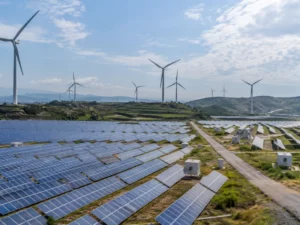
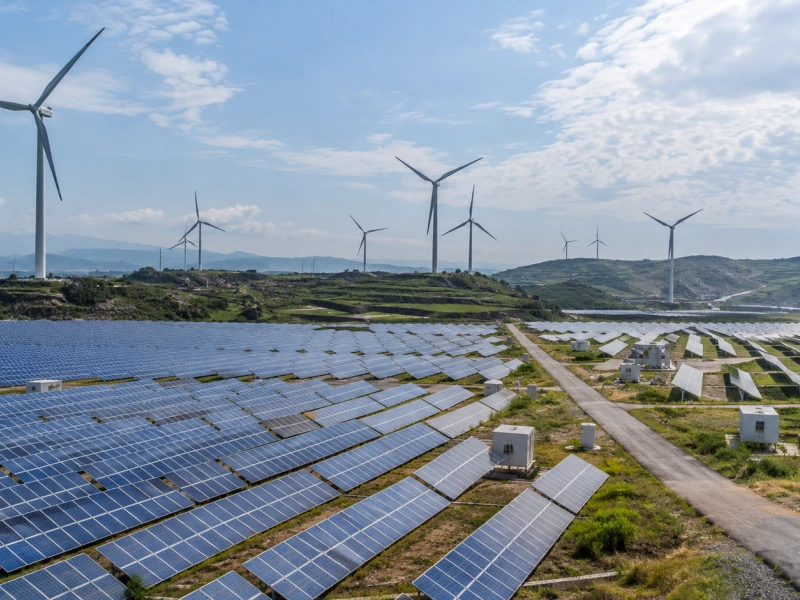
From the data offered by the International Renewable Energy Agency (IRENA), in the year 2024, the solar capacity in China exceeded 800 gigawatts (GW), while the wind power generation capacity was more than 500 GW. On the other hand, there were more than 170 GW of solar capacity and 150 GW of wind capacity in the United States.
China leads the US in renewable energy capacity installations. Nevertheless, the thing is that capacity does not always equal the production of electricity. It depends on the weather conditions, equipment usage, and connection to the grid. Various state policies and regulations in the United States influence the development of renewable energy.
1.2 Does More Renewable Capacity Mean Greater Energy Leadership?
Leadership in clean energy is not just about constructing facilities. The projects have to be able to produce electricity effectively and efficiently. Assume that we have a 1 GW solar power plant with an average capacity factor of 20%. The plant could produce 1.75 TWh per year. In case of delays in grid connections for two years, the amount of missed electricity production will be about 3.5 TWh.
| Comparison | China | United States |
| Solar Capacity | Global leader | Expanding market |
| Wind Capacity | Global leader | Major market |
| Manufacturing | Large integrated supply chains | Growing domestic investment |
| Innovation | Engineering and manufacturing advances | Strong research ecosystem |
| Grid Development | Extensive transmission investment | Permitting and connection challenges |
Capacity alone cannot determine overall competitiveness.
2. Which Industries Are Driving the China vs. U.S. Clean Energy Race?
Solar panel production, electric cars, and batteries are key in the race. Emerging technologies can be the game-changers of tomorrow.
2.1 Who Leads in Solar Panels, Electric Vehicles, and Batteries?
Solar Manufacturing
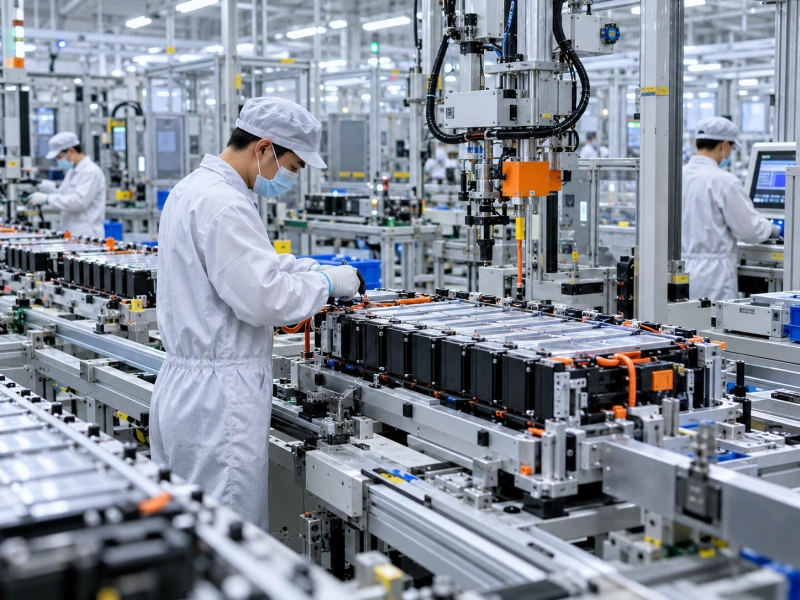
China maintains large-scale logistics for photovoltaic wafers, cells, and modules. Integration in manufacturing helps with economies of scale and cost-efficient production. The United States is developing solar manufacturing capacity, though some of its supply chain is still internationally reliant.
Electric Vehicles
Based on the report of the International Energy Agency, Global EV Outlook 2025, in 2024, China sold over 11 million electric cars, which made up 40% of its domestic car sales. In the U.S., the market is smaller, but involves major vehicle manufacturers and technological developers. Factors like price, charging infrastructure, consumer preference, and policies affect adoption in both countries.
Battery Manufacturing
China enjoys many strengths in manufacturing lithium-ion batteries and the related supply chain. The United States is developing domestic production facilities and studying next-generation batteries.
Competitiveness in the long term will rely not only on the production capacity, but also on the availability of raw materials, manufacturing costs, safety, and recycling.
2.2 Can the U.S. Compete Through Advanced Energy Technologies?
There are several areas in which the US is advancing in research:|
• Advanced nuclear energy: Small modular reactors and advanced reactors.
• Long-duration storage: The technology that produces electricity for a long duration.
• Clean hydrogen: Production of low-emission hydrogen and its application in the industrial sector.
• Carbon capture and storage: The technology that is used for the management of carbon emissions from industries.\
• Smart grids: The technology that helps in predicting and distributing electricity.
Still, scientific innovations do not guarantee success in the commercial field. They have to be cost-effective, efficient, scalable, and in high demand. China makes advances in battery science, grid technologies, and renewable energy engineering.
3. Who Is Likely to Win the Clean Energy Race in the Future?
The future of leadership will be reliant on manufacturing efficiencies, infrastructure preparedness, and technology commercialization capabilities.
3.1 Is Manufacturing Scale More Important Than Innovation?
Strengths of China can be identified through the aspects associated with integration in the supply chain, economies of scale, and speed in project development. Competition in manufacturing, renewable integration, and coal use will limit future growth.
Strengths of the USA are related to research entities, tech corporations, and investments. Transmission assets, project development, and regulatory uncertainty will limit future growth.
Scale of innovation and scale of manufacturing are not conflicting with each other. Both are necessary for the development of technologies into energy solutions.
3.2 What Will Determine Global Clean Energy Leadership?
Four indicators will be particularly important:
| Key Indicator | What It Measures |
| Deployment Speed | How quickly projects become operational |
| Manufacturing Competitiveness | Production costs and supply chain resilience |
| Grid and Storage Readiness | Ability to integrate and balance clean electricity |
| Technology Commercialization | Success in bringing innovations to market |
Future competitiveness will be driven by trade policy, supply chains of critical minerals, and global energy consumption. Rather than one nation excelling in all sectors, both China and the U.S. could dominate in distinct industries and applications.
Conclusion
The reason is that China is ahead of all its rivals in terms of having the highest capacity for solar and wind energy and also in terms of possessing strengths concerning the manufacturing of solar energy, batteries, and EVs. Nevertheless, despite this fact, the US still has a chance to be competitive due to its innovations.
While the capacity of production and renewables are used as measures of comparison between the two countries, China takes the lead in the competition. However, innovations can change this position in the future.
0