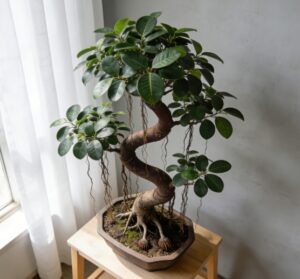
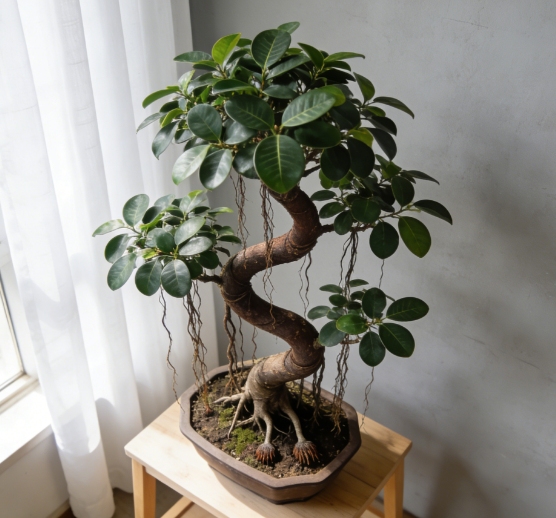
Aerial roots are one of the most striking features of a ficus bonsai, giving it a dramatic, aged, and natural appearance. Encouraging aerial roots ficus bonsai growth at home is not only about environmental conditions, but also about how you interact with the plant through pruning, shaping, and long-term care strategies. By using the right techniques and maintaining consistency, you can significantly enhance the formation of aerial roots and elevate the artistic value of your bonsai.
Strategic Pruning to Stimulate Growth
Pruning is a powerful way to redirect the plant’s energy and encourage aerial roots ficus bonsai development.
- Encourage energy redistribution: By trimming excess leaves and weak branches, the tree redirects its energy toward stronger growth areas, which often include aerial root development points.
- Promote new growth nodes: Strategic cuts near branch joints or trunk areas can stimulate dormant buds, increasing the chances of aerial root emergence.
- Maintain structural balance: Proper pruning helps create a balanced canopy, allowing the plant to focus on producing roots rather than supporting unnecessary foliage.
Careful and regular pruning is essential for shaping both the appearance and biological growth of your bonsai.
Use of Physical Training and Shaping Methods
Training techniques play a crucial role in influencing how aerial roots ficus bonsai grow and develop over time.
- Wire training branches: Using bonsai wire allows you to position branches in ways that expose certain areas of the trunk, encouraging roots to form where needed.
- Create downward growth paths: Adjusting branch angles to face downward can naturally guide aerial roots to extend toward the soil.
- Develop intentional root structure: Through repeated shaping, you can design how and where aerial roots appear, turning the tree into a living sculpture.
These methods help transform natural growth into an artistic bonsai design.
Improve Light Exposure Patterns
Instead of focusing only on light intensity, consider how light exposure is distributed across your aerial roots ficus bonsai.
- Rotate the bonsai regularly: Rotating the plant ensures all sides receive balanced light, preventing uneven growth and encouraging uniform root development.
- Expose different areas selectively: By slightly adjusting positioning, you can expose certain trunk sections to more light, which may trigger aerial root growth in those areas.
- Avoid shadow dominance: Consistent shading on one side may reduce activity, so maintaining balanced exposure is key to encouraging even root formation.
Thoughtful light management helps guide the plant’s natural growth direction.
Enhance Growth Through Soil and Repotting Techniques
The way you manage the root system beneath the soil also influences the development of aerial roots ficus bonsai.
- Encourage root competition: Slightly restricting underground root space during repotting can push the plant to develop aerial roots as an alternative growth strategy.
- Refresh soil periodically: Repotting allows the plant to access fresh nutrients and improves overall vitality, indirectly supporting aerial root growth.
- Expose part of the root base: Leaving some roots partially visible above the soil can encourage the plant to continue producing aerial roots in response to exposure.
These techniques help balance underground and aerial root systems for a better overall structure.
Long-Term Care and Patience in Bonsai Development
Aerial roots ficus bonsai grow is a gradual process that requires patience and consistent attention to detail.
- Maintain a consistent care routine: Sudden changes in care methods can disrupt growth patterns, so consistency is key.
- Observe and adapt: Each bonsai responds differently—carefully observing how your tree reacts helps you adjust your techniques over time.
- Think in long cycles: Bonsai cultivation is a long-term art; aerial roots may take months or even years to fully develop and mature.
Patience allows the plant to grow naturally while you guide its form gradually.
Conclusion
Encouraging aerial roots ficus bonsai growth at home goes beyond basic environmental control—it is an art of shaping, guiding, and understanding the plant’s growth behavior. Through strategic pruning, thoughtful training, light management, soil techniques, and long-term care, you can actively influence how aerial roots form and develop. With dedication and patience, your bonsai will evolve into a unique and visually stunning masterpiece that reflects both nature and your personal creativity.
0