In modern pharmaceutical and laboratory production, maintaining sterility, precision, and efficiency is essential. One important piece of equipment used to achieve these goals is the vial filling and sealing machine. This machine is widely used in pharmaceutical factories, biotechnology laboratories, cosmetic production lines, and chemical packaging processes. It automates the process of filling liquid or powder products into vials and sealing them securely to ensure product safety and quality.
Understanding how a vial filling and sealing machine works can help manufacturers choose the right equipment and optimize their production processes.
Introduction to a Vial Filling and Sealing Machine
A vial filling and sealing machine is an automated packaging system designed to accurately fill vials with liquids, powders, or injectable solutions and then seal them with rubber stoppers and aluminum caps. The machine integrates several processes into a single streamlined system.
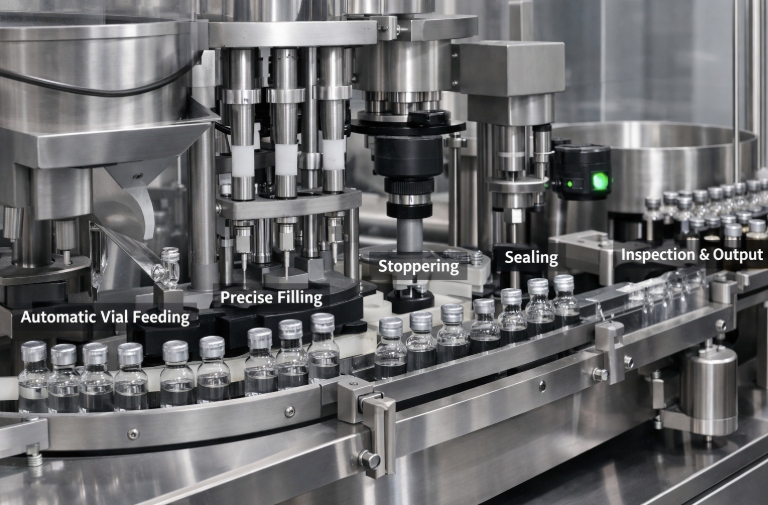
Typically, a vial filling and sealing machine handles several coordinated stages to ensure efficient and accurate packaging:
- Automatic Vial Feeding: Empty vials are organized and transported into the production line using a hopper, conveyor, or rotary table. This system ensures each vial is properly aligned and spaced for smooth operation.
- Precise Filling of Product: The machine dispenses an exact amount of liquid or powder into each vial using high-precision pumps. This step guarantees dosage consistency, which is crucial for pharmaceutical applications.
- Stoppering of the Vial: Rubber stoppers are automatically placed on the filled vials using mechanical arms or vacuum systems, protecting the product from contamination.
- Sealing or Capping: Aluminum caps are applied and crimped over the stoppers, securing the vial and preventing leakage while maintaining sterility.
- Optional Inspection and Output Collection: Some machines include inspection systems to check fill levels, stopper placement, and cap quality. Approved vials are then collected and sent for labeling or packaging.
Because pharmaceutical products require extremely high hygiene standards, most vial filling and sealing machine systems are designed to operate in cleanroom environments and follow strict GMP (Good Manufacturing Practice) guidelines.
Main Components Of The Machine
A standard vial filling and sealing machine usually consists of several key components that work together to ensure accurate and efficient operation.
- Vial Feeding System
This section automatically arranges and transports empty vials onto the conveyor system. It ensures that vials enter the filling station in a stable and orderly manner. - Filling System
The filling system is responsible for dispensing precise amounts of liquid or powder into each vial. High-precision pumps, such as peristaltic pumps or piston pumps, are commonly used to maintain consistent filling accuracy. - Stoppering Unit
After the vials are filled, rubber stoppers are placed on top of each vial to protect the contents from contamination. - Sealing Or Capping System
The sealing unit crimps an aluminum cap over the rubber stopper to securely close the vial. This ensures the product remains sterile and leak-proof.
How Does A Vial Filling And Sealing Machine Work?
The working process of a vial-filling and sealing machine usually follows a continuous and automated workflow.
Step 1: Vial Loading
Empty vials are placed into the feeding system and transported to the filling station through a conveyor.
Step 2: Accurate Filling
The filling unit dispenses a predetermined amount of liquid or powder into each vial. Advanced machines use sensors and automated controls to ensure precise dosage.
Step 3: Stoppering
Rubber stoppers are automatically inserted into the filled vials. This step helps prevent contamination and protects the product.
Step 4: Sealing
An aluminum cap is applied and crimped tightly over the stopper, completing the sealing process.
Step 5: Output And Inspection
Finished vials are transported to the output area, where they may undergo inspection or labeling before packaging.
Benefits of a Vial Filling and Sealing Machine
Using a vial filling and sealing machine offers several important benefits for manufacturers:
- High accuracy: Ensures precise filling volumes for every vial
- Improved efficiency: Automates multiple packaging steps in one system
- Enhanced sterility: Designed to meet pharmaceutical hygiene standards
- Lower labor requirements: Reduces manual work and mistakes
- Consistent product quality: Maintains uniform packaging results
These advantages make the vial filling and sealing machine an essential solution for industries that require sterile and precise packaging.
Conclusion
A vial filling and sealing machine plays a critical role in modern pharmaceutical and biotechnology production lines. By combining vial feeding, precise filling, stoppering, and sealing into a single automated process, it ensures both efficiency and product safety. As the demand for high-quality sterile packaging continues to grow, investing in a reliable vial filling and sealing machine helps manufacturers improve productivity, maintain strict quality standards, and meet regulatory requirements.
0