When choosing between underground and aerial cables, companies consider factors such as cost, reliability, maintenance, and environmental impact from a holistic perspective. By weighing the pros and cons, companies ultimately select the solution that best suits their unique needs.
Cost Comparison Between Underground vs Aerial Cable Systems
Cost is a major factor when deciding between underground vs aerial cable systems since both installation and maintenance can really affect project budgets.
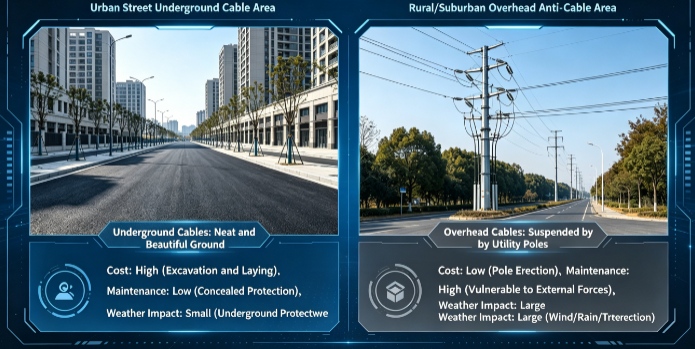
Aerial cable systems usually cost less initially. Setting up utility poles and wires is simpler too, using reliable construction techniques. This is why many rural areas and long routes use aerial cables.
Installing underground cable systems is way more expensive. There’s excavation, trench digging, conduit laying, cable protection, and road repairs. And in urban areas with rough terrain? The costs get super high — usually a few times more than overhead systems.
But long-term costs vary too. Underground systems, although pricey upfront, tend to be cheaper later on since they avoid weather-related damage and need less tree maintenance.
People may choose overhead lines to save costs, while some projects may choose underground lines to ensure future compatibility.
Reliability and Weather Resistance
When it comes to power distribution, reliability matters most. Underground cables come out on top since they’re shielded from wind, ice, falling trees, and specific lightning damage. In contrast, storms easily knock aerial cables out, leading to frequent blackouts. So, underground seems like the better choice for more consistent service. Underground cables continue to work through even the nastiest weather.
Still, underground systems aren’t perfect. Flooding, old insulation, and digging injuries happen quite a bit. Nevertheless, for places with wild weather, underground setups typically provide greater stability and durability overall.
Maintenance and Repair Considerations
The maintenance needs for underground cables versus those up in the air vary a lot and affect how smoothly things run over time.
For above-ground cables, spotting problems is usually easy because you can just look for issues. Fixing teams can get to damaged parts quickly, too, and replacement bits tend to cost less. This means outages often don’t last long.
But if something’s wrong with underground wiring, finding the fault usually demands special gear. Tracking down where it occurred takes longer, and digging is often required before any fixing can start. All this makes the repairs way more manpower intensive and costly.
Although aerial cables are more prone to failure than underground cables, underground cables can take longer to repair once a problem occurs.
Environmental and Aesthetic Impact
When considering underground vs aerial cables, we must take into account not only performance but also the environment and aesthetics.
Underground cables have clear advantages. They preserve the scenery and clean up city views by removing those bulky utility poles. Plus, they enhance tourist attractions and modern urban areas by cutting down on unsightly clutter. Underground cables can also prevent birds and other animals from damaging power lines.
The installation and maintenance of overhead cables are much easier because you don’t need to do digging. This also means installing them doesn’t disturb anything underground.
So, cities usually choose underground cables for a cleaner look, while rural areas prefer the easier, cheaper overhead ones.
Choosing the Right Solution for Different Applications
We shouldn’t try to pick one option over another for everything. Instead, let’s choose what works best for each specific project. For example:
– Building power networks in super dense urban spots.
– Making fancy new neighborhoods.
– Helping important places like hospitals and data centers.
– Setting up where there are lots of extreme weather issues.
Go for aerial cables in these situations:
– Spanning large distances for power transmission.
– Bringing electricity to rural areas.
– Sticking to a tight budget.
– Needing quick setup and easy changes later on.
These days, utilities take a different approach. In the city center, they laid the cables underground, but in the suburbs and countryside, they used utility poles. This manages costs and reliability well, making total sense.
Conclusion
Choosing between underground and aerial cables depends on what matters most. Aerial cables have lower setup costs and are easier to install and maintain quickly. This makes them ideal for large projects and rural areas where rapid setup is required. However, underground cables handle weather better and look nicer. The catch? Repairing them is much harder and more costly initially. When figuring out what’s best for today’s power needs, you consider your budget, the climate, how straightforward maintenance will be, and plans for future infrastructural growth. By weighing all that, both utility companies and developers choose the option that meets their specific requirements.
0